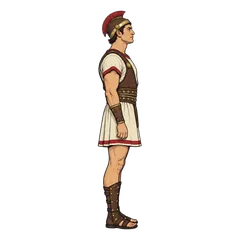
Gladiator
As a gladiator you would be expensive property trained to perform violence well – which, oddly, made your owner keen to keep you alive.
From funeral rite to mass entertainment
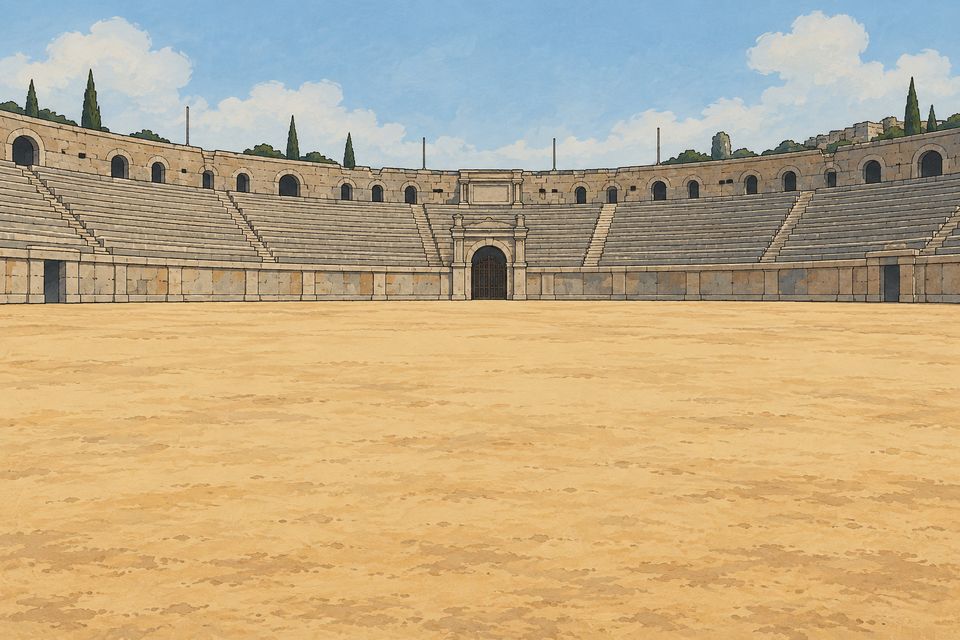
Gladiatorial combat began in Rome in 264 BCE as part of aristocratic funerals and grew into the centrepiece of public spectacle. When the Flavian Amphitheatre – the Colosseum – opened in 80 CE, Emperor Titus marked it with 100 days of games.
Most gladiators were enslaved people, prisoners of war or condemned criminals, but some free men signed up voluntarily as auctorati, trading their legal rights for a fee and the chance of fame. Female fighters existed too, though rarely; a relief from Halicarnassus shows two women named Amazon and Achillia.
Specialists with matched equipment
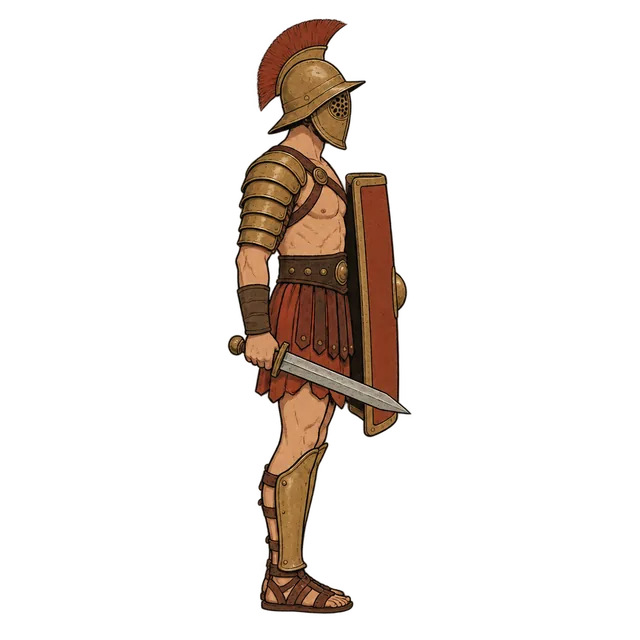
You would not simply be handed a sword. Gladiators trained in schools (ludi) as specific types, paired so that strengths and weaknesses balanced: the net-and-trident retiarius, almost unarmoured, against the heavily helmeted secutor; the murmillo with a large shield against the thraex with a small one and a curved blade. Referees supervised bouts.
Analysis of skeletons from a gladiator cemetery at Ephesus showed a mainly plant-based diet of grains and beans. Romans even nicknamed gladiators hordearii, barley men, and Pliny the Elder mentions a drink of plant ash they took, probably helping their bones.
Your odds of surviving
Not every fight ended in death. A defeated gladiator could appeal for mercy (missio), and the sponsor, guided by the crowd, decided. Trained fighters were costly, and historians estimate that in the early empire a substantial majority of bouts ended with both men alive – though the risk rose over time.
Still, a career was short. Tombstones often record men dying in their twenties after a handful to a few dozen fights. The lucky few earned the wooden sword (rudis) that signalled retirement, and some went on to train others.