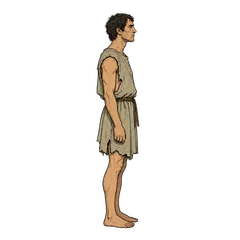
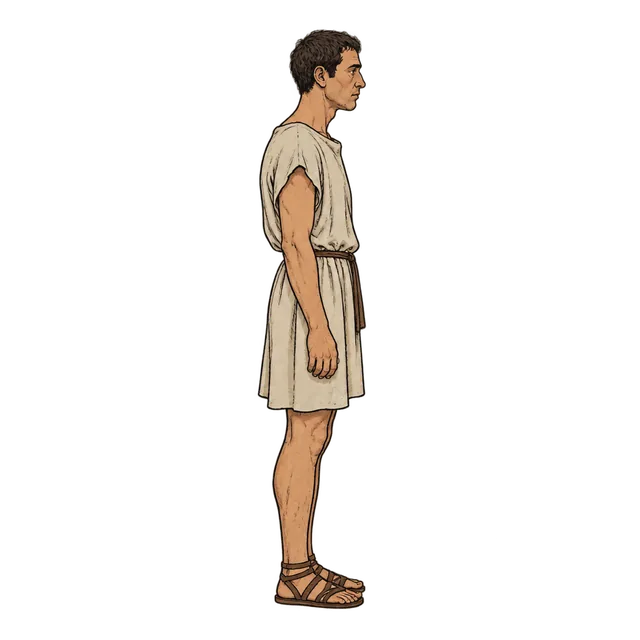
Roman slave
Reborn as an enslaved person in Rome, you would be legally a thing rather than a person – owned, sold and inherited, with your fate depending almost entirely on who held the deed.
How people ended up enslaved
Rome did not invent slavery, but it practised it on an enormous scale. War was the main source: whole populations of conquered cities could be sold at auction, often right behind the advancing army. Others were born into slavery, kidnapped by pirates, abandoned as infants and raised by slave dealers, or – earlier in Roman history – enslaved for debt.
Historians estimate that enslaved people made up perhaps 10–20 per cent of the empire’s population, with higher shares in Roman Italy at the end of the Republic. They were not marked by race or uniform. According to Seneca, the Senate once rejected a proposal to give slaves distinctive clothing, fearing they would realise how many of them there were.
Very different lives under one label
What your days looked like would depend on your placement. In the mines and on large agricultural estates, work was brutal, food minimal and life short. On a galley or in a quarry it was little better. In a wealthy household you might be a cook, cleaner, wet nurse, hairdresser or porter; educated slaves, often Greek, worked as secretaries, accountants, doctors and teachers.
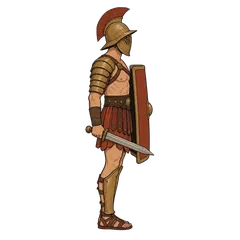
Even comfortable positions offered no legal protection. Owners could beat, sell or separate families, and slave testimony in court was traditionally taken under torture. Fear of revolt was constant, and the uprising led by Spartacus in 73–71 BCE ended with thousands of captured rebels crucified along the Via Appia.
Freedom – sometimes
Unusually for an ancient society, Rome freed many slaves, especially household and urban ones. Some saved small allowances to buy their liberty; others were freed in wills. A slave freed by a Roman citizen usually became a citizen too, though with obligations to the former owner, and their children were born free. Tombstones of proud freedmen, some of them wealthy, survive by the thousand – but for most of the enslaved, especially in mines and fields, freedom never came.