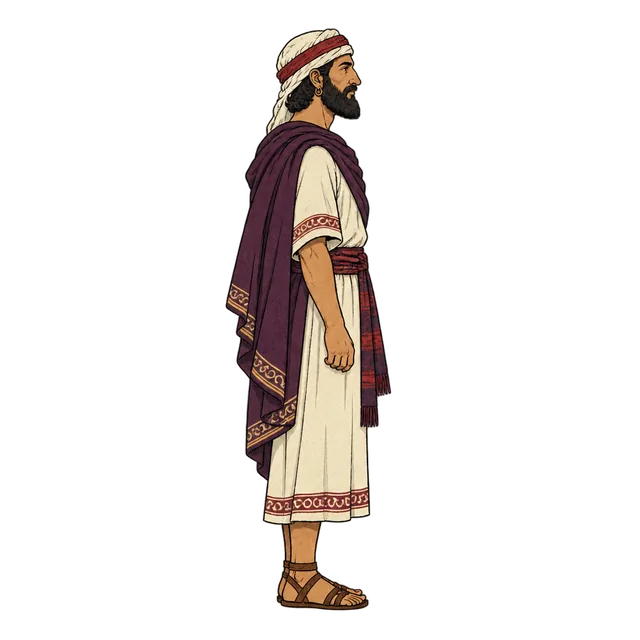
Phoenician merchant
As a Phoenician merchant you would make your living on the sea, sailing from the Levant to Spain with cargo worth a fortune – and a writing system that would outlast your whole civilisation.
City-states on a narrow coast
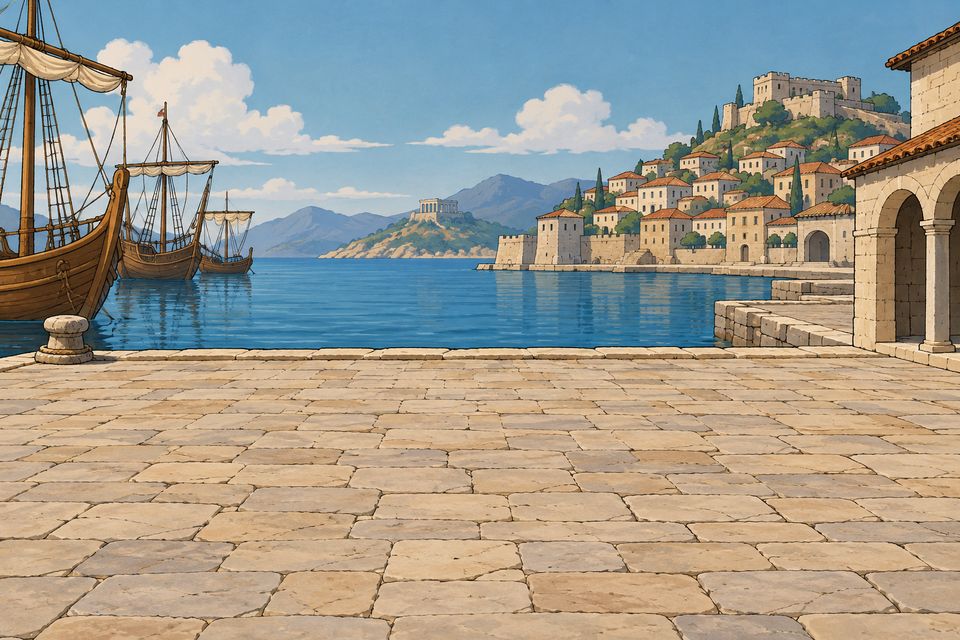
The Phoenicians lived in independent cities along the coast of modern Lebanon and northern Israel and Syria – Tyre, Sidon, Byblos and Arwad among them. With mountains at their backs and little farmland, they looked to the sea. From about 1100 BCE their ships pushed westward, founding trading posts and colonies across the Mediterranean: on Cyprus, Sicily, Sardinia, in North Africa and in southern Spain at Gadir, modern Cádiz.
The most famous colony was Carthage, traditionally founded by settlers from Tyre in 814 BCE. It eventually outgrew its mother city and became Rome’s great rival.
What filled your hold
Your cargo might include cedar timber from the Lebanon mountains, prized in Egypt and Mesopotamia; glassware; carved ivory; wine and olive oil; and metals, especially silver and tin from the west. The luxury product that made the Phoenicians famous was purple dye, extracted from murex sea snails. It took thousands of snails to dye a small amount of cloth, and the process stank – huge mounds of discarded shells have been found near dye works.
Trading meant long voyages, usually in the sailing season from spring to autumn, often hugging coasts and stopping at night. Herodotus reports that Phoenicians sent by Pharaoh Necho II sailed around Africa around 600 BCE; whether this happened is still debated.
The alphabet in your luggage
Business needed record-keeping, and the Phoenicians used a compact script of 22 consonant letters, in use by around 1050 BCE. The Greeks adopted it, adding vowels, and through Greek and Latin it became the ancestor of most alphabets used in Europe today. Little Phoenician literature survives; most of what we know comes from inscriptions, archaeology and the often hostile accounts of Greeks and Romans.