Galley rower
As an oarsman on an ancient warship you would be one of 170 engines – and, contrary to the movies, most likely a free man drawing wages rather than a chained slave.
The myth of the galley slave
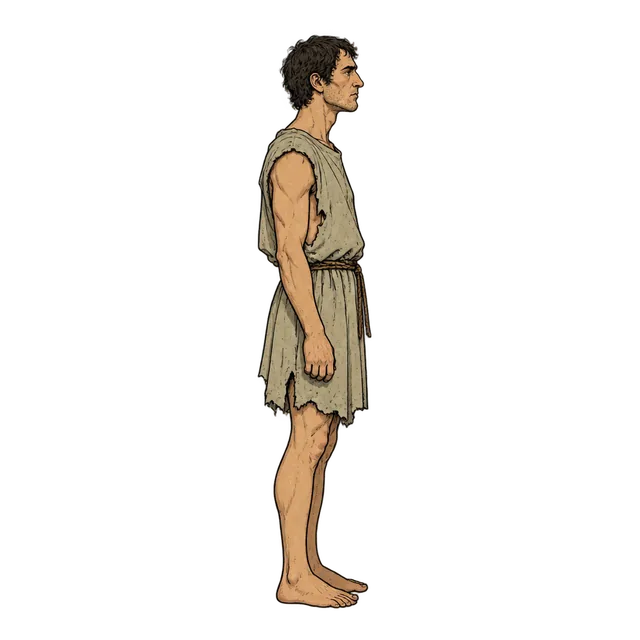
The image of chained slaves whipped at the oars comes largely from early modern Mediterranean galleys and from films like Ben-Hur. In classical Athens, the fleet’s rowers were mostly free citizens, especially the poorer thetes, along with resident foreigners and paid mercenaries. Enslaved men were used only occasionally, in emergencies, and were sometimes freed afterwards. Rome’s navy also relied mainly on free, paid provincials serving long terms, who could earn citizenship on discharge.
This mattered politically: in democratic Athens, the poor men who rowed the triremes that won the Battle of Salamis in 480 BCE gained real weight in the assembly.
Inside a trireme
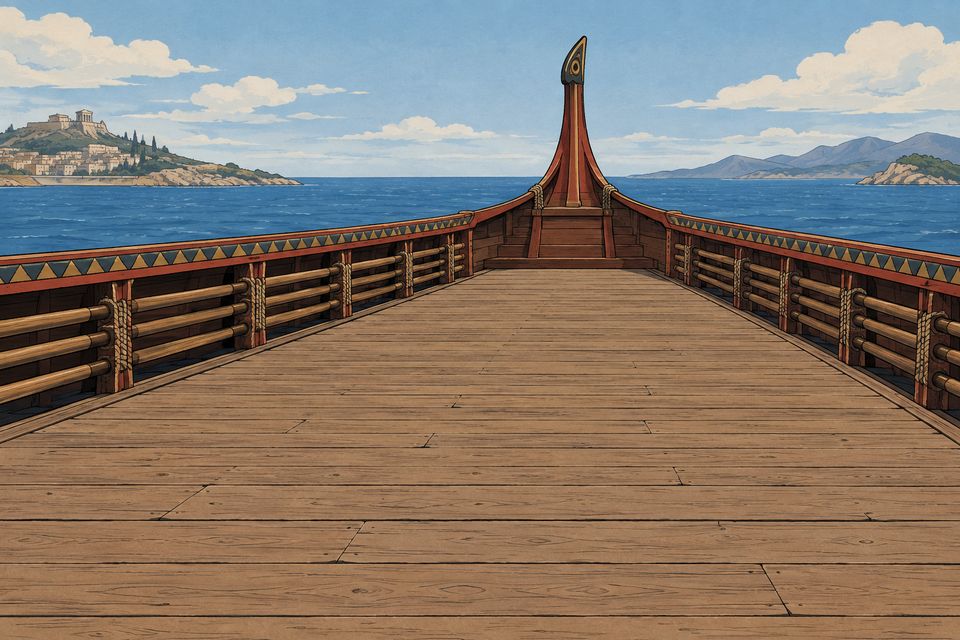
The trireme, the main warship of the 5th century BCE, was about 37 metres long and very narrow, with 170 rowers on three levels: 62 on the top tier and 54 on each of the two lower tiers. Each man worked a single oar. Those on the bottom sat just above the waterline, below their colleagues – an unpleasant place to be when people above you were sweating, or worse.
A flute player kept time, and the coordination required was intense; a modern full-size reconstruction, the Olympias, built in the 1980s, showed how much training it took simply to row together.
Daily life aboard
Warships had almost no room for food, water or sleep. Crews normally landed every evening to cook and camp on the beach, which made fleets dependent on friendly coastlines. In battle, the ship itself was the weapon: a bronze ram at the bow smashed into enemy hulls. If your ship was holed, swimming ability decided whether you survived, and many did not.