Giraffe
As a giraffe you would enter the world by falling about two metres to the ground – and be standing on your own long legs within an hour.
Seven bones, two metres
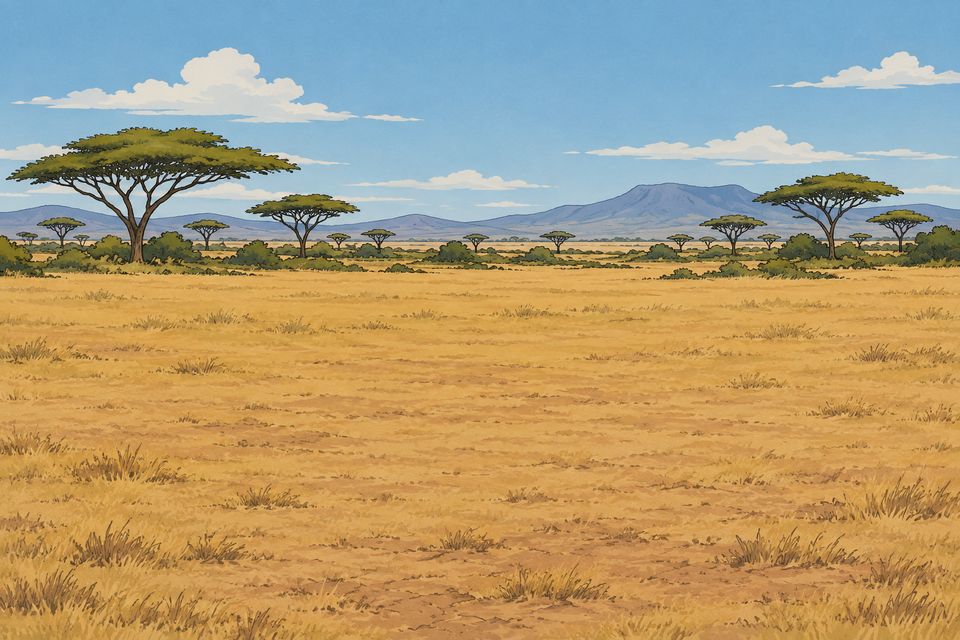
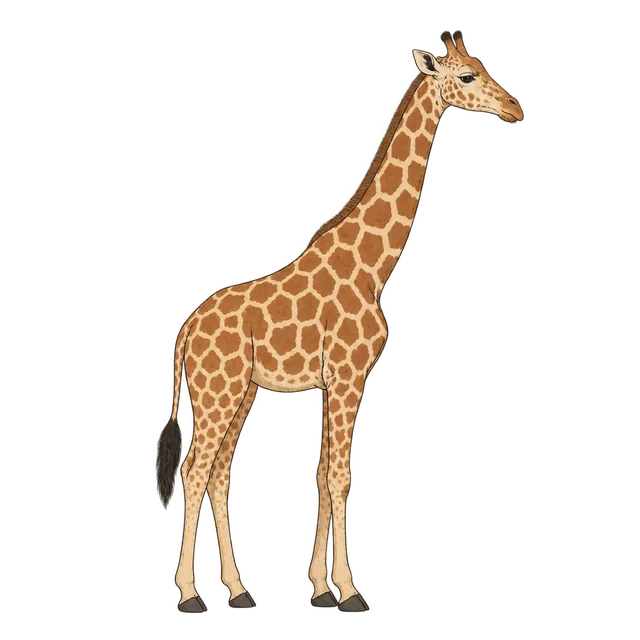
Giraffes live on savannas and open woodlands of sub-Saharan Africa. Males can stand about 5–5.5 m tall and weigh over a tonne; females are shorter and lighter. Your neck alone would be about two metres long, yet like nearly all mammals you have only seven neck vertebrae, each up to roughly 25 cm long. Pumping blood that high requires a powerful heart and very high blood pressure, and special valves and elastic vessels prevent a rush of blood to the head when you bend down to drink.
Each giraffe’s coat pattern is unique. Genetic studies published in 2016 suggested that there are four distinct giraffe species rather than one, though the classification is still debated.
Browsing above everyone else
You would feed on leaves, shoots and flowers, especially from acacia trees, eating several dozen kilograms a day. Your dark, prehensile tongue, around 45–50 cm long, wraps around branches and strips leaves from between thorns, and thick saliva protects your mouth. As a ruminant, you chew cud like a cow. Because leaves contain much of your water, you can go several days without drinking.
Giraffes sleep little, often in short naps totalling a few hours a day, frequently standing. Herds are loose and fluid, with individuals joining and leaving.
Kicks, lions and a silent decline
Pregnancy lasts about 15 months. Calves are roughly 1.8 m tall at birth, but many do not survive their first year, as lions, hyenas, leopards and wild dogs prey on them. A healthy adult can defend itself with kicks powerful enough to kill a lion, and adults are mostly vulnerable when drinking or lying down. Males compete by necking, swinging their heads into each other. Giraffe numbers fell by around 30–40 percent between the mid-1980s and mid-2010s due to habitat loss, poaching and conflict; the IUCN lists the giraffe as Vulnerable. In the wild giraffes live about 20–25 years.