Wood tick
Your entire life as a tick would come down to three meals, often months apart, and the patience to wait for each one with your front legs held out like grappling hooks.
The art of questing
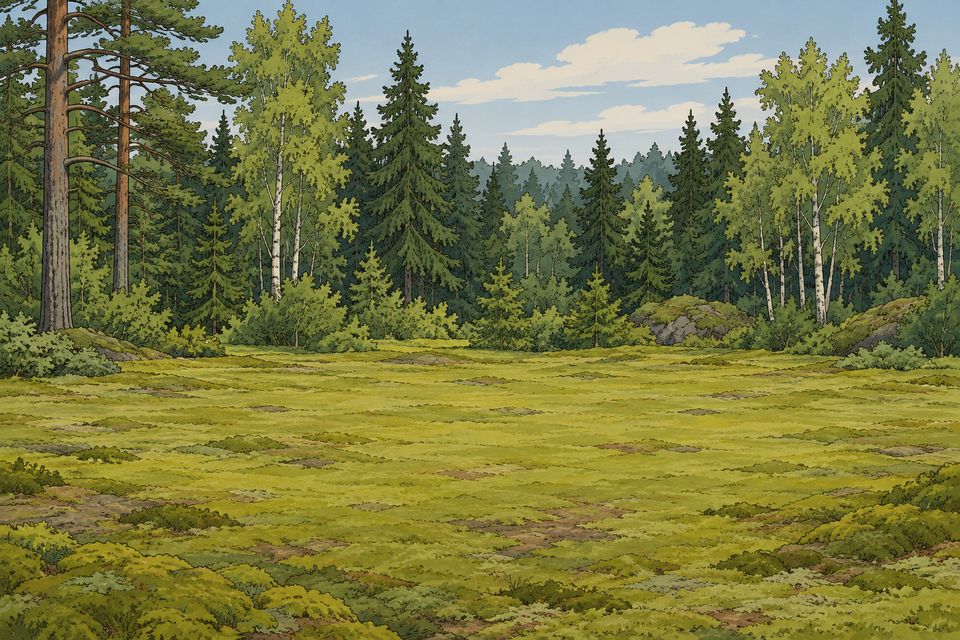
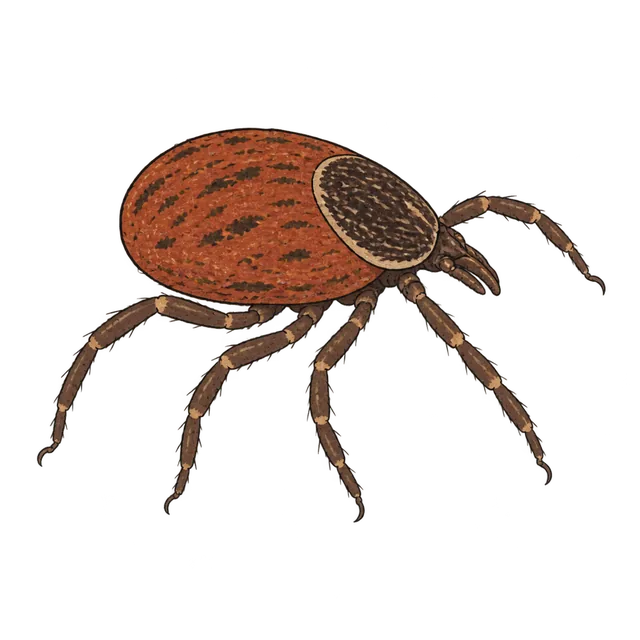
In European forests and meadows the tick you would most likely be is the castor bean tick, Ixodes ricinus. You cannot jump, fly or drop from trees. Instead you climb a blade of grass or a low shrub, usually well under a metre high, and stretch out your front legs in a pose biologists call questing. When a deer, mouse, dog or hiker brushes past, you grab fur or fabric and hang on.
You find hosts with Haller’s organ, a sensory pit on your front legs that detects carbon dioxide, body heat, odours and vibration. Questing is risky: you lose water in dry air, so you regularly retreat to the damp leaf litter to rehydrate.
Three stages, three dinners
You hatch from one of roughly two thousand eggs as a six-legged larva the size of a poppy seed. After one blood meal, often from a small rodent, you drop off and moult into an eight-legged nymph. Another meal, another moult, and you are an adult. The whole cycle usually takes two to three years, sometimes longer, most of it spent waiting.
Feeding is slow. You cut into the skin, anchor your barbed mouthparts with a cement-like secretion and inject saliva that numbs the area and stops blood clotting. An adult female feeds for about a week and swells to over a hundred times her unfed weight, then drops off, lays her eggs and dies.
Why humans care
That saliva exchange is also how ticks pass on pathogens, including the bacteria behind Lyme disease and the virus causing tick-borne encephalitis. This makes you one of the most medically important animals in Europe. Your likely ends: dehydration, a bird or shrew in the leaf litter, a fungal infection, or a pair of tweezers.