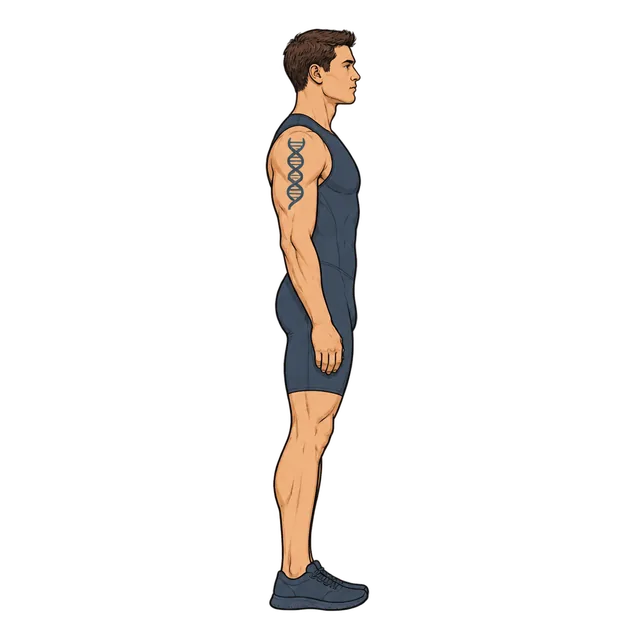
Gene-tailored athlete
As a gene-tailored athlete you would be the product of technology that sport officials have already banned – and of science that still knows far less about building champions than headlines suggest.

Genes that already matter
Some natural gene variants clearly affect performance. The Finnish cross-country skier Eero Mäntyranta, Olympic champion in the 1960s, carried a rare mutation in the EPOR gene that raised his red blood cell count, boosting oxygen delivery. A common variant of ACTN3 that leaves people without a protein found in fast-twitch muscle fibres is rare among elite sprinters. Mutations in the myostatin gene produce unusually muscular animals, such as Belgian Blue cattle and some whippets.
But most athletic traits depend on hundreds of genes, each with a tiny effect, plus training, nutrition and luck. No single edit makes a champion.
Gene doping and its rules
The World Anti-Doping Agency has prohibited gene doping since 2003, and its banned list now covers gene editing and gene therapy that could improve performance. Tests are being developed to detect foreign DNA from such treatments. Meanwhile, CRISPR-based therapies are reaching medicine: in 2023 regulators in the UK and US approved Casgevy, the first CRISPR treatment, for sickle cell disease.
Editing human embryos for enhancement remains widely prohibited. In 2018 He Jiankui’s announcement of gene-edited babies in China provoked worldwide condemnation and a prison sentence.
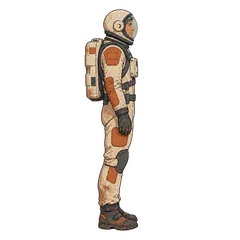
Competing on Mars (speculation)
In a Martian settlement, gravity at about 38 per cent of Earth’s would change sport: jumps would be higher and throws longer, while low gravity would weaken bones and muscles over time. Some futurists suggest edits that might help people adapt, but whether this would ever be safe, legal or fair is an open question – and today the most reliable performance enhancer is still training.