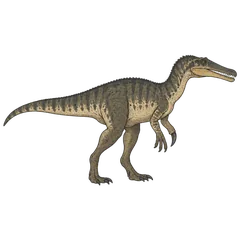
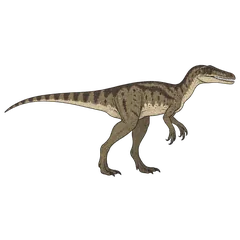
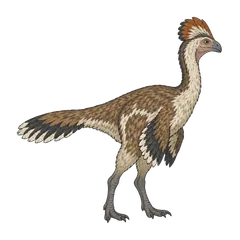
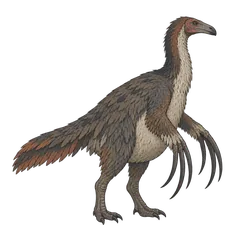
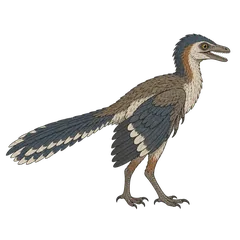
Giganotosaurus
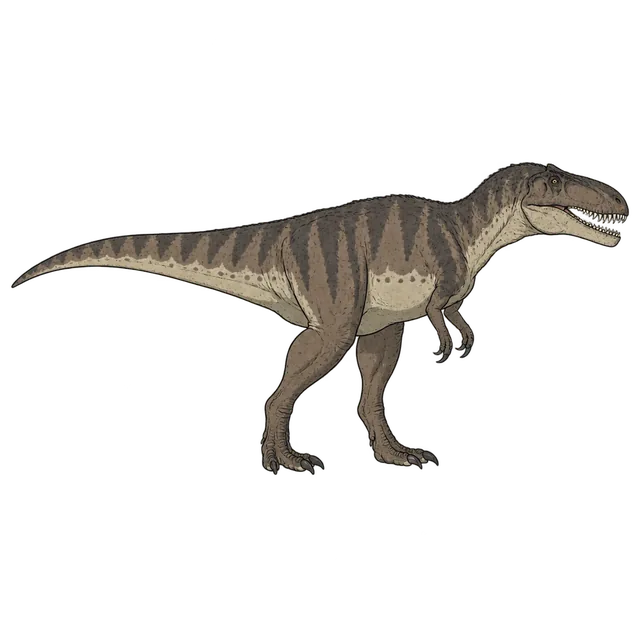
Spin Giganotosaurus and you become one of the largest meat-eaters ever to walk on land – a rival in size to T. rex, though the two never met, separated by some 30 million years and an ocean.
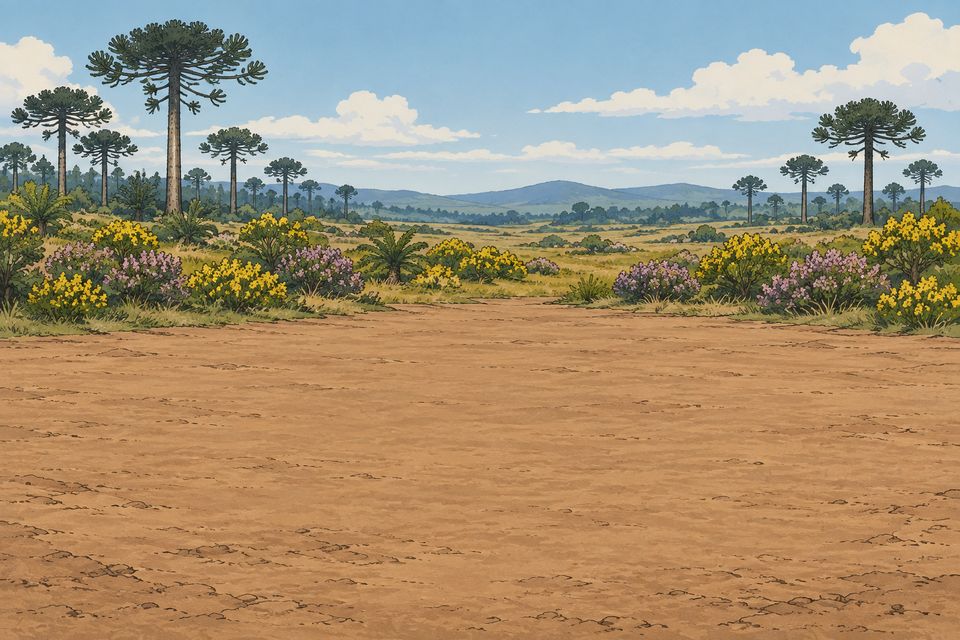
Neuquén, 98 million years ago
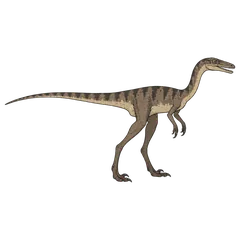
You live in the early Late Cretaceous, about 99–97 million years ago, in what is now Neuquén Province, Argentina. Your home in the Candeleros Formation is a landscape of braided rivers, wind-blown sand and seasonal wetlands. The plant-eaters around you include sauropods such as Andesaurus and Limaysaurus; small predators include the slender dromaeosaur Buitreraptor.
The climate was warm and seasonal, and the region was still connected to Africa in its recent past: your closest relatives include Carcharodontosaurus of North Africa. Dry spells probably concentrated animals near rivers, where predators like you found most of their meals.
Slicer, not crusher
You are roughly 12–13 metres long, with mass estimates usually around 6–8 tonnes. Your skull is long and fairly narrow, with blade-like serrated teeth suited to slicing flesh rather than crushing bone, as T. rex did. The likely strategy was to inflict deep, bleeding wounds on large prey and let blood loss do the rest.
Whether you hunted the truly gigantic sauropods such as Argentinosaurus is speculation: these lived in slightly younger rocks of the region. Your close relative Mapusaurus was found in a bonebed with several individuals, hinting that some carcharodontosaurids gathered in groups, but evidence for Giganotosaurus itself is lacking.
Found by an amateur
In 1993, amateur fossil hunter Rubén Carolini spotted bones while driving a dune buggy near Villa El Chocón. The skeleton was named Giganotosaurus carolinii in 1995 by Rodolfo Coria and Leonardo Salgado. Because only a few partial specimens are known, every size estimate comes with wide error margins. New specimens could shift those figures either way, and debates over whether it or T. rex was heavier mostly come down to which estimate you trust.