Coelophysis
Come back as Coelophysis and you are one of the first dinosaurs to make it big – not in size, but in numbers: a light, quick hunter of the Triassic, as common as it was skinny.
The Triassic Southwest
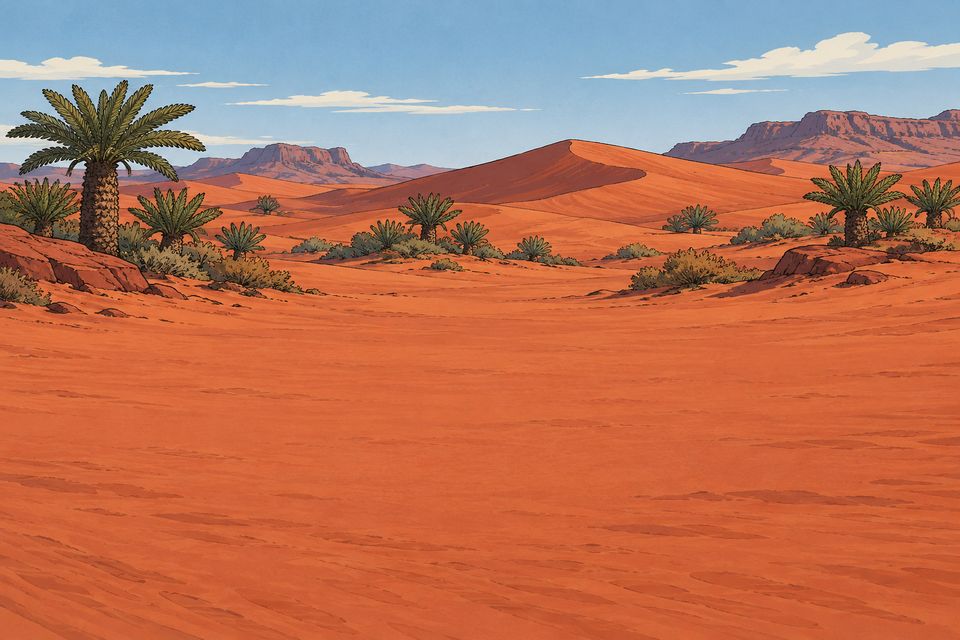
You live in the Late Triassic, roughly 210 million years ago, in what is now New Mexico. The continents are still joined in Pangaea, the climate is hot and strongly seasonal, and rivers cross a landscape of conifers and ferns. Dinosaurs are not yet in charge: crocodile-line reptiles such as phytosaurs and rauisuchians are the big predators.
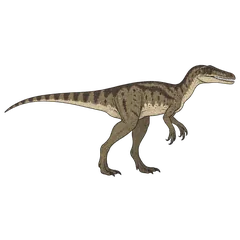
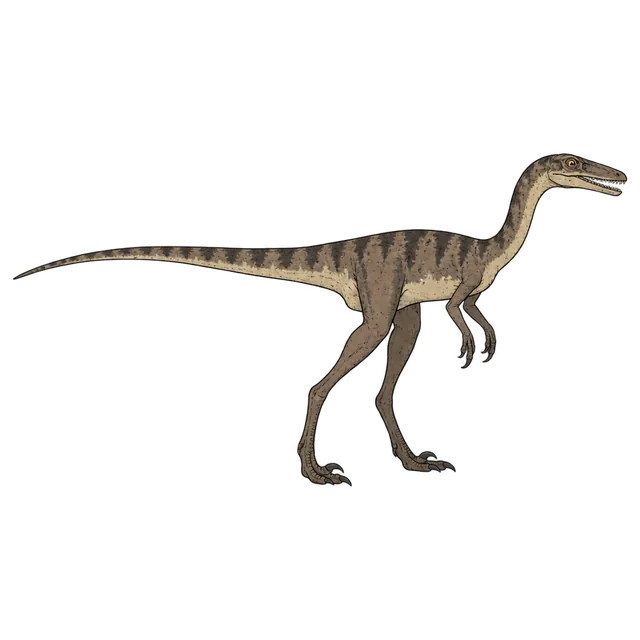
You are about 3 metres long but weigh only an estimated 15–25 kilograms, with a long neck, narrow snout full of small serrated teeth and hollow bones – hence your name, “hollow form”. Your big eyes suggest good vision, and you probably hunted small reptiles, insects and fish. Two body types appear among the skeletons, one more robust and one more slender, which some researchers interpret as males and females, although that is unproven.
Death at Ghost Ranch
In 1947 Edwin Colbert’s team began excavating a quarry at Ghost Ranch that contained hundreds of Coelophysis skeletons, from juveniles to adults, piled together. They seem to have died together and been buried by a flood, perhaps after gathering at shrinking water during a drought.
For decades some skeletons were said to contain eaten young of their own kind. A 2006 re-examination showed the supposed babies were mostly a small crocodile relative, Hesperosuchus, so the cannibalism story is now considered unsupported. Mass burials like this are rare, and they give an unusually clear view of how a single dinosaur species varied in size and build.
Into orbit
In 1998 a Coelophysis skull from the Carnegie Museum flew on the Space Shuttle Endeavour to the Mir space station, making it the second dinosaur in space. Back on Earth, it is New Mexico’s state fossil.