Herrerasaurus
As a Herrerasaurus you would live at the very dawn of the dinosaurs – a big fish in a small pond, since your kind made up only a sliver of the animals around you.
Ischigualasto, 231 million years ago
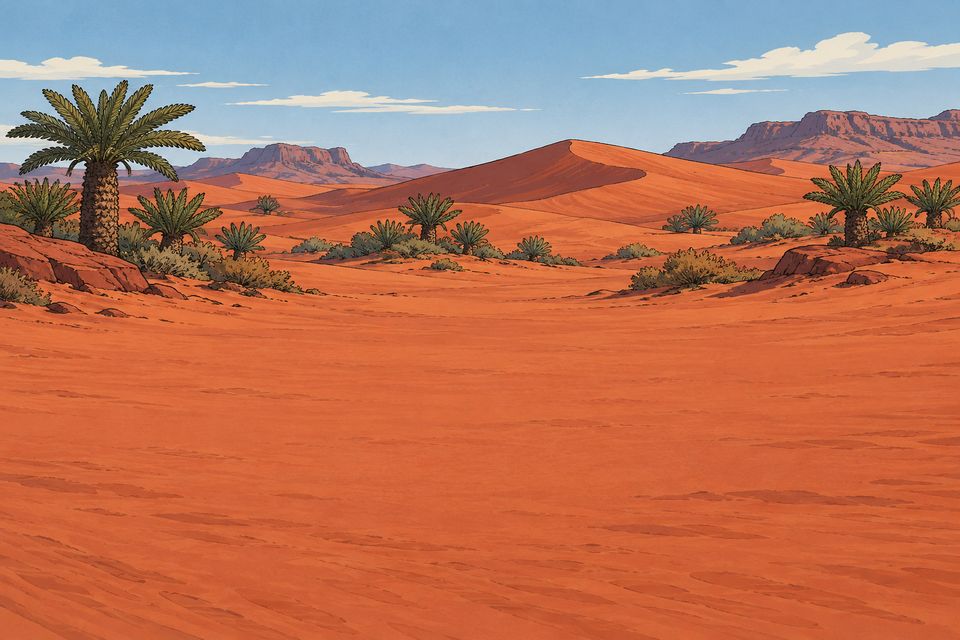
Your home is the Ischigualasto Formation in San Juan Province, Argentina, now a desert park nicknamed the Valley of the Moon. Volcanic ash layers date it to about 231 million years ago. Then it was a seasonal river valley with forests and periodic volcanic activity. The most common large animal was the beaked plant-eater Hyperodapedon, a rhynchosaur, and there were plenty of mammal relatives called cynodonts. Dinosaurs, including the small Eoraptor and Eodromaeus, made up only a small share of the fauna.
Body of an early predator
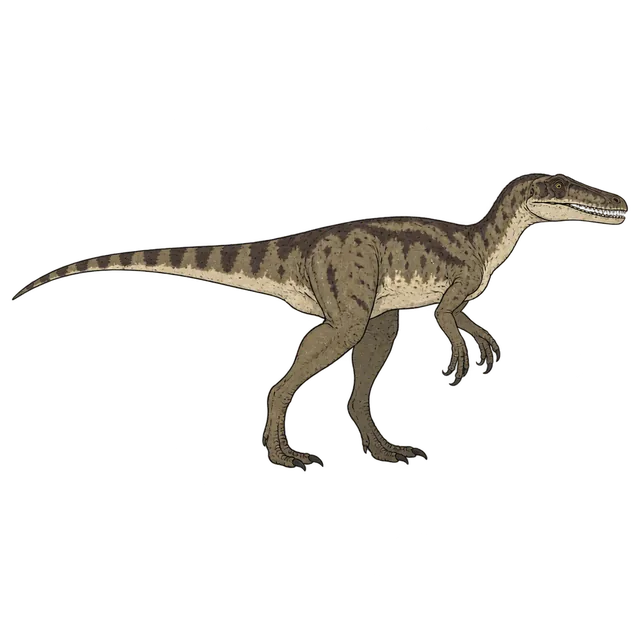
You are roughly 3–6 metres long and up to an estimated 200–350 kilograms, walking on two legs with a long skull and backward-curving serrated teeth. A sliding joint in your lower jaw let it flex slightly, helping you grip struggling prey. Your arms are long, with three working fingers ending in curved claws.
You were one of the largest predators of your world, but not the top one: the 7-metre crocodile-line reptile Saurosuchus probably saw you as competition, or as a meal. Your hips and legs were built for an upright, efficient stride, a key early dinosaur feature, and your long hind limbs suggest a capable runner. Prey probably included rhynchosaurs and cynodonts, the most common animals around you.
Who exactly were you?
The first bones were found by Victorino Herrera, a local goatherd, and the animal was named after him in 1963. Its place in the family tree is debated: some studies place it among early theropods, others treat it as an early saurischian that branched off before the main dinosaur groups split. One well-known skull carries healed bite marks, a reminder that fights between early dinosaurs left their traces too.