Repenomamus
As a Repenomamus you would overturn the usual story of the Mesozoic: you are a mammal, and sometimes the dinosaurs are on your menu.
Mammal big enough to matter
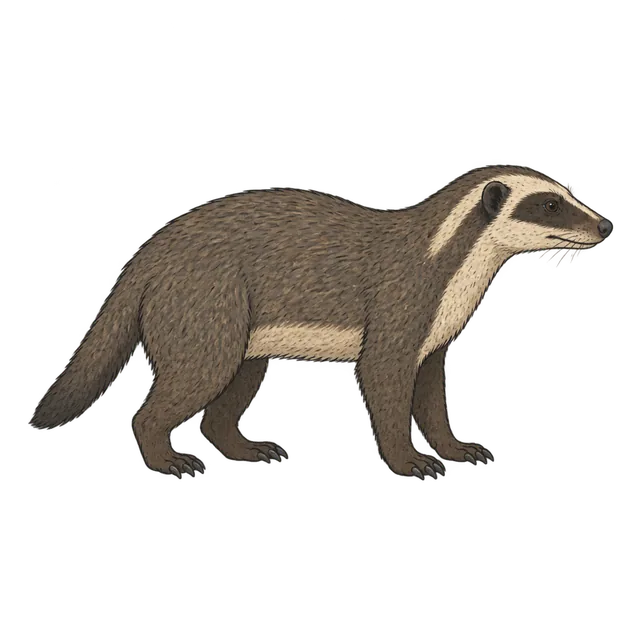
Repenomamus lived about 125 million years ago in the Early Cretaceous forests and lakes of north-eastern China, preserved in the same Yixian Formation beds as Confuciusornis. It was a gobiconodontid, a member of an extinct branch of early mammals, not related to any living group. The larger species, R. giganticus, was about a metre long including the tail and weighed an estimated 12–14 kg, roughly badger-sized – very large for a Mesozoic mammal, most of which were the size of shrews or mice. A smaller species, R. robustus, was around the size of a Virginia opossum. Its teeth were sharp and its build stocky, with short legs like a badger’s, so it probably did not chase prey over long distances.
The dinosaur in the stomach
In 2005, Yaoming Hu and colleagues described an R. robustus specimen with the bones of a juvenile Psittacosaurus, a small plant-eating dinosaur, in its stomach region. The bones were in pieces, suggesting the baby was torn up and swallowed. It is the first direct evidence of a mammal feeding on a dinosaur, although it cannot tell us whether it was hunted or scavenged. It was a surprise: the old textbook picture of Mesozoic mammals had them all as tiny insect-eaters scurrying away from dinosaurs.
A dramatic find
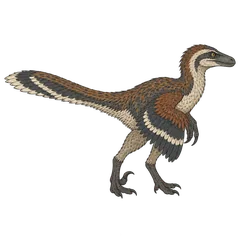
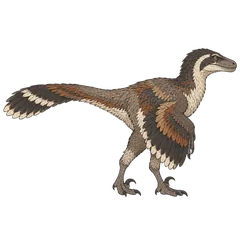
In 2023, researchers described an even more striking fossil from the same rocks: a Repenomamus locked in combat with a Psittacosaurus, its jaws clamped on the dinosaur’s ribs, both apparently buried by a volcanic mudflow mid-fight. The dinosaur was larger, which suggests Repenomamus would sometimes attack prey bigger than itself. As a Repenomamus, then, you would be a stocky, short-legged predator with strong jaws, probably not fast, but bold. Danger would come from larger theropods sharing your forests – and, as these fossils show, from the volcanoes.