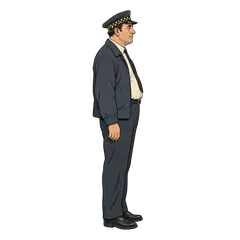
Tram driver
As a tram driver you would stand at the front of a rattling car for hours, hand on the controller, ringing the bell at every cart, cyclist and daydreaming pedestrian.
Electricity takes the reins
At the turn of the 20th century, cities across Europe replaced horse-drawn trams with electric ones fed by overhead wires. Kraków’s first electric tram ran in 1901 and Warsaw’s in 1908; horse trams disappeared soon after. Trams became the backbone of urban transport, carrying workers, schoolchildren and shoppers for decades, and in many Polish cities they still are.
At the controller
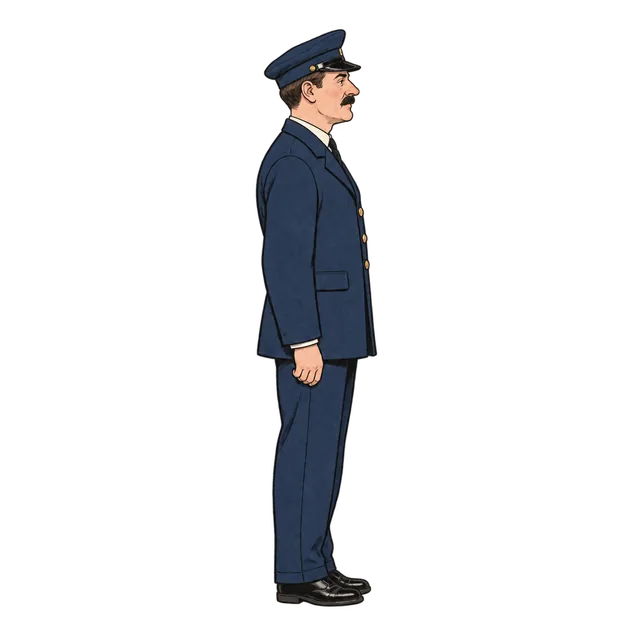
Early drivers often stood in an open or semi-open platform exposed to wind, rain and frost. They operated a controller – a handle that stepped up the power to the motors – along with a hand brake and, later, electric and magnetic track brakes. Sanding gear helped on slippery rails. The driver, called a motorman, worked with a conductor who sold tickets in the car, until self-service ticketing gradually replaced conductors in the second half of the century.
The job demanded concentration: trams cannot swerve, braking distances are long, and streets were full of horse carts, pedestrians and, increasingly, cars. Shifts started before dawn and ran late into the night, with fixed timetables and depots as second homes. Over a career, a driver came to know the city – and its regular early-morning passengers – better than almost anyone.
Wartime and women at the controls
Both world wars pulled men into the army, and women took over many tram jobs, including driving – a change that sometimes stuck. In occupied Warsaw, trams were segregated, with sections reserved for Germans. Tram workers were also involved in the resistance: trams carried couriers, and some drivers passed on messages and supplies. Post-war, tram networks were rebuilt from rubble, and Konstal in Chorzów produced most of Poland’s tram cars.