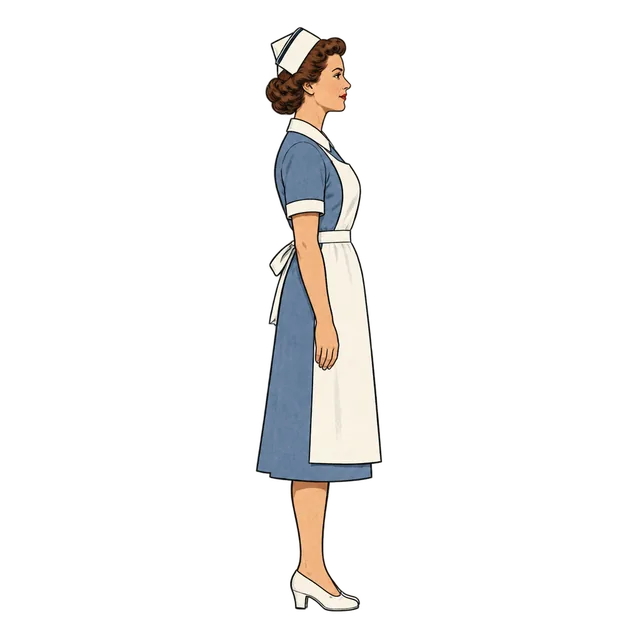
Nurse
As a 20th-century nurse you would be the person patients saw most – changing dressings, measuring temperatures and holding hands through the night shift.
Nursing under fire
Both world wars drew huge numbers of women into nursing. In the First World War nurses worked in casualty clearing stations a few kilometres behind the front, in hospital trains and ships and in base hospitals, treating gunshot and shell wounds, gas injuries, infections and trench foot. Before antibiotics, wound infection was a major killer; nurses irrigated wounds with antiseptic solutions and fought gangrene with what they had.
Many paid with their lives. Edith Cavell, a British nurse running a training school in occupied Brussels, was executed by the Germans in 1915 for helping Allied soldiers escape. In the Warsaw Uprising of 1944, young nurses and medics of the Home Army ran makeshift hospitals in cellars under bombardment.
Medicine transformed
The century revolutionised what nurses could do. Penicillin, discovered by Alexander Fleming in 1928, became widely available from the mid-1940s, turning once-deadly infections into treatable ones. Blood transfusion, vaccines, intensive care units and new surgery all expanded the nurse’s role. Daily work still meant long shifts, physical labour – lifting patients, scrubbing, sterilising instruments – and close observation of patients for signs of change. Nurses also took on public health work, visiting homes, schools and factories to teach hygiene, vaccinate children and track tuberculosis, one of the century’s great killers.
A profession of its own
Nursing became an educated profession with registration, schools and, later, university degrees. In Poland, the Warsaw School of Nursing opened in 1921, and a 1935 law regulated the profession. Uniforms with white caps marked a nurse’s training school for decades. The work was respected but often poorly paid – a tension that runs through the whole century.