Taxi driver
As a taxi driver you would know every shortcut in the city, hear confessions from strangers on the back seat, and spend long nights waiting at the rank.
Meter and motor
Motor taxis spread in big cities in the first decades of the 20th century, replacing horse-drawn cabs. The word ‘taxi’ comes from the taximeter, a device that measured distance and calculated the fare; it was perfected in Germany in the 1890s. London’s licensed cab drivers had to pass ‘the Knowledge’, a famously tough test of the city’s streets introduced in 1865 for horse cabs and kept for motor taxis.
Shifts, fares and risks
Drivers usually worked long shifts, often at night, and many drove a car they owned or rented from a company. Income depended on fares and tips, which made traffic, weather and the business cycle personal problems. Taxi drivers sat in a car for 10–12 hours, which was hard on the back and the lungs, and night work brought the risk of drunk or violent passengers and robbery. In return the job offered independence and endless stories. Drivers also built informal networks – favourite ranks, cafés that stayed open late, colleagues who would warn of police checks or trouble spots – and, from mid-century, two-way radios linked cabs to a dispatcher.
A taxi in the People’s Republic
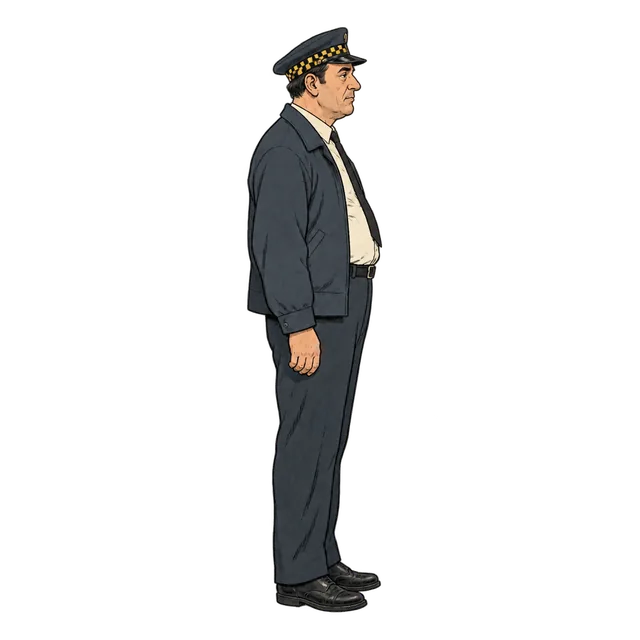
In communist Poland taxi driving was one of the few areas where private enterprise was tolerated. Cars such as the FSO Warszawa, later the Fiat 125p, Polonez and imported Volgas or Mercedes, wore checkered strips on their sides. Since cars were scarce and expensive, taxi licences were valuable, and taxi drivers were often better off than many white-collar workers – and were also reputed to be well connected, sometimes informally trading foreign currency or goods in short supply. They also became essential: with long waits for private cars, a taxi was how many people got to hospitals, stations and weddings.