Earthworm
As an earthworm you would eat your way through the dark, breathe through your skin and spend your life quietly rebuilding the ground under everyone’s feet.
Life with no eyes, lungs or bones
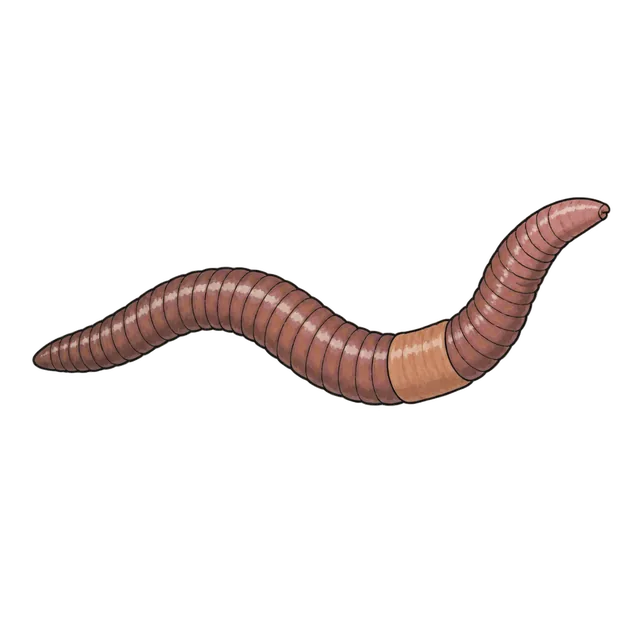
The common earthworm, Lumbricus terrestris, lives in meadows, gardens, farmland and woodland soils across Europe and has been spread by people worldwide. Adults reach about 15–25 cm, sometimes more. You would have no eyes, but light-sensitive cells in your skin tell you when you are dangerously exposed. You have no lungs either: oxygen passes through your moist skin, which is why you must stay damp, and why you surface when heavy rain floods your burrow.
Your body is a chain of more than a hundred segments, each with tiny bristles, the setae, that grip the burrow walls. Five pairs of aortic arches, often called hearts, pump blood through your body.
Night shifts at the surface
Lumbricus terrestris digs deep, vertical burrows, sometimes more than two metres down. At night you would stretch up to the opening, grab fallen leaves and drag them into the hole, where they soften before you eat them. You also swallow soil, digesting the organic matter and leaving behind casts that are richer in available nutrients than the surrounding earth.
Charles Darwin studied this work for decades; his last book, published in 1881, was about earthworms and the formation of soil. He concluded that worms gradually bury stones and old ruins and turn over enormous amounts of earth.
Love, eggs and enemies
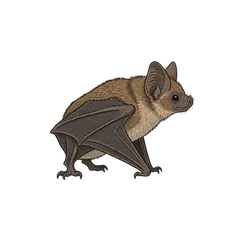
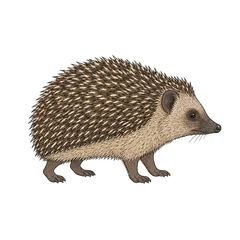
You are a hermaphrodite, but you still need a partner. Two worms lie side by side and exchange sperm; later the clitellum, the thick band near the front, secretes a cocoon that slides off over the head and holds the eggs. Your enemies are many: moles, which store paralysed worms in larders, blackbirds, thrushes, foxes, badgers and gulls following ploughs. In the wild most worms live a year or two, though individuals have lived several years in captivity.