Spy
As a spy you would live a double life in which the most dangerous moments were not shootouts but routine ones – a dead drop, a missed signal, a colleague who asked one question too many.

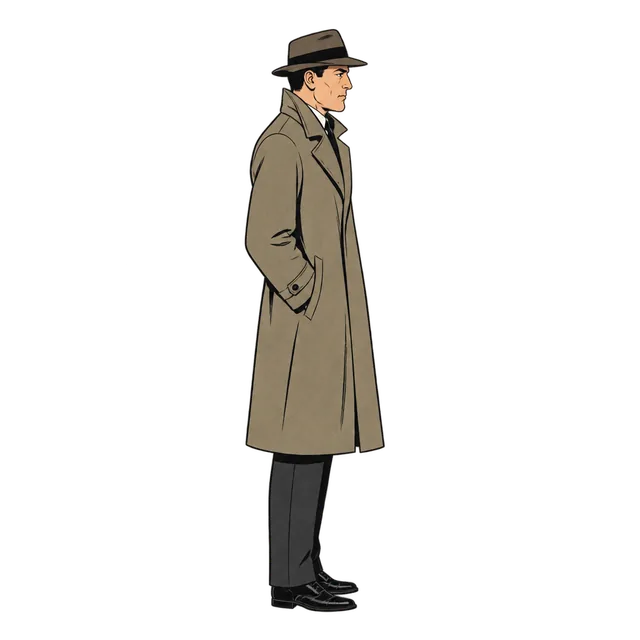
Tradecraft, not gadgets
The 20th century built espionage into permanent state institutions: Britain’s MI6 (founded 1909), the Soviet NKVD and later KGB, the American CIA (1947). Real intelligence work was mostly patient and dull. Case officers recruited agents with access to secrets, communicated through dead drops, coded radio messages, invisible ink and microdots, and checked constantly for surveillance. Many of the most damaging spies were not daring infiltrators but trusted insiders – officials, clerks and scientists – motivated by ideology, money, resentment or blackmail.
Codebreakers and atom spies
Some of the century’s biggest intelligence victories came from mathematics. Polish codebreakers first broke the German Enigma machine in 1932, and in July 1939 handed their knowledge to the British and French. This helped the Allied effort at Bletchley Park, whose ‘Ultra’ intelligence shaped the war at sea and on land. Meanwhile, Soviet spies such as Klaus Fuchs passed atomic bomb secrets from the Manhattan Project, accelerating the Soviet bomb, first tested in 1949.
The Cold War and its cost
The Cold War was a golden age of spying. Berlin was full of agents, and spies were swapped on the Glienicke Bridge. Poland had its own dramatic case: Colonel Ryszard Kukliński, a Polish General Staff officer, passed some 40,000 pages of secret Warsaw Pact documents to the CIA between 1972 and 1981, including plans for martial law, before being exfiltrated in November 1981. He was sentenced to death in absentia; the verdict was later overturned.
For most spies the life ended less glamorously: in prison, in exile, under a new identity – or, for those caught in the Soviet bloc, often with execution.