Pharaoh
As a pharaoh you would be considered the living link between gods and people – which sounds glamorous until you realise the cosmos itself was supposed to depend on your rituals.
A god-king with a job description
Egypt’s kings ruled for nearly three millennia, from the unification around 3100 BCE to the death of Cleopatra VII in 30 BCE. The king was seen as the earthly embodiment of the god Horus and the son of the sun god Ra. His central duty was to uphold maat – truth, justice and cosmic order – against chaos, by performing rituals, honouring the gods with temples, judging and defending the borders.
The word pharaoh comes from per-aa, meaning great house, which originally referred to the palace and only from the New Kingdom onward was used for the king himself.
Crowns, titles and a crowded court
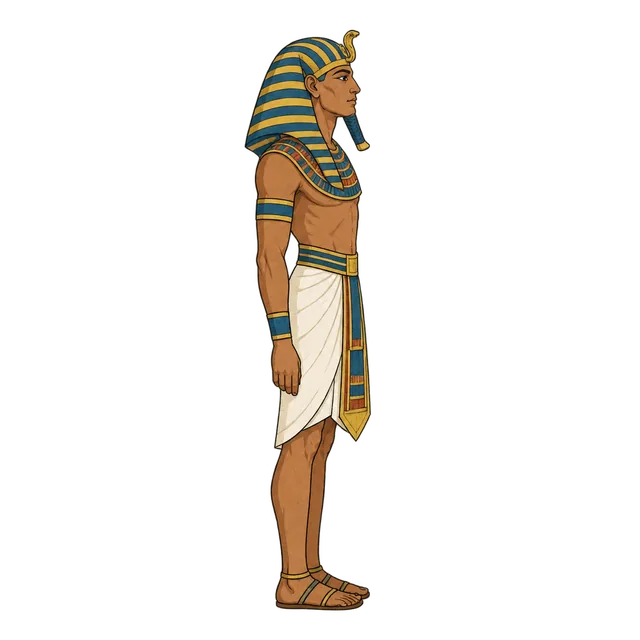
You would wear symbolic regalia: the white crown of Upper Egypt, the red crown of Lower Egypt or both together, the striped nemes headdress, the crook and flail, and a false ceremonial beard – worn even by female rulers such as Hatshepsut. A full royal name had five parts.
Daily life involved administration through viziers, audiences, temple ceremonies and military campaigns. Royal households included many wives and children, which led to intrigue: papyri describe a plot in the harem against Ramesses III, and CT scans of his mummy revealed a deep cut to the throat.
Preparing for eternity
Much of a reign went into preparing for the afterlife. Old Kingdom kings built pyramids; the Great Pyramid of Khufu at Giza, around 2560 BCE, was originally about 146 metres tall. New Kingdom rulers were buried in rock-cut tombs in the Valley of the Kings. Most were robbed in antiquity, which is why the nearly intact tomb of the young Tutankhamun, found by Howard Carter in 1922, caused a sensation.