Giant panda
As a giant panda you would be a bear with a carnivore’s gut living on one of the least nourishing foods in the forest – which is why eating would fill half your day.
A bear in the bamboo forests
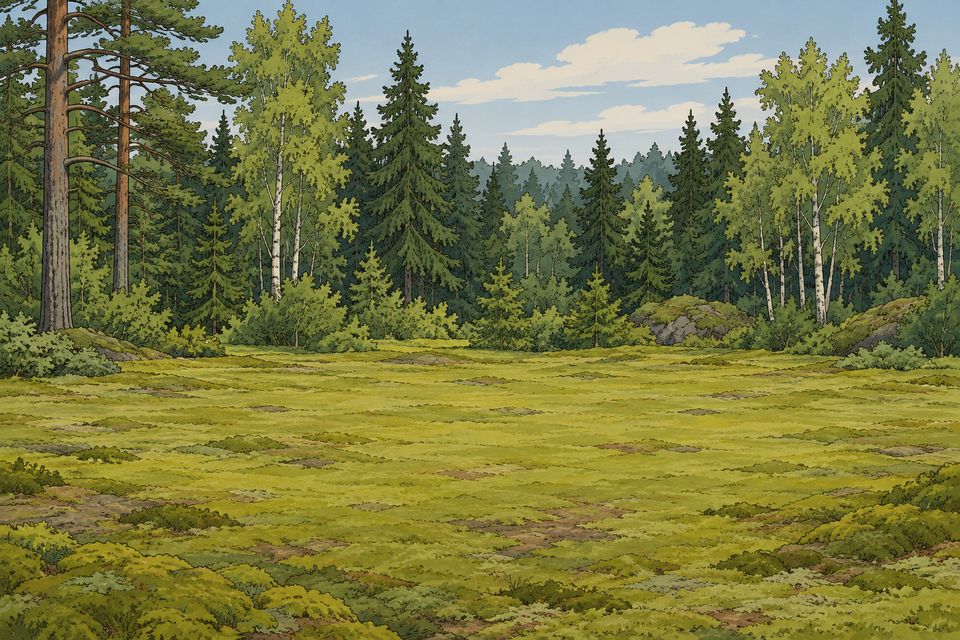
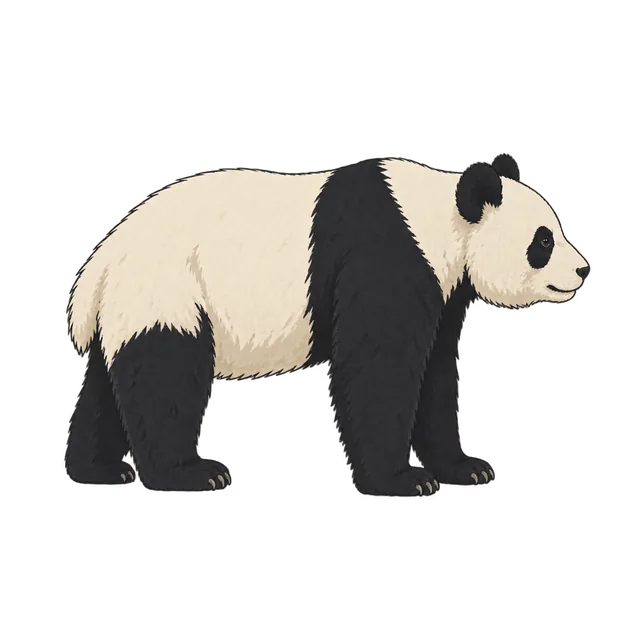
The giant panda, Ailuropoda melanoleuca, lives only in the mountains of central China, mainly in Sichuan, with smaller populations in Shaanxi and Gansu, in cool, wet forests of conifers and broadleaf trees with dense bamboo understorey, usually between about 1,200 and 3,500 m. Adults weigh around 70–125 kg; males are larger. Genetic studies confirm that pandas are true bears, despite their unusual lifestyle.
Your wrist would carry a famous adaptation: an enlarged wrist bone, the radial sesamoid, that works like a false thumb, letting you grip bamboo stems while you strip and chew them with powerful jaws and broad molars.
Bamboo all day
Bamboo makes up about 99 percent of the panda diet, yet your digestive system remains that of a carnivore, with no specialised chambers for fermenting plants. You digest only a small fraction of what you eat, so you compensate with volume: often 10–14 hours of feeding a day and roughly 12–38 kg of bamboo, depending on whether you eat leaves, stems or shoots. You conserve energy by moving little, and you do not hibernate.
Pandas are solitary, communicating with scent marks on trees – sometimes doing a handstand to place the mark higher – and with bleats, honks and barks during the short breeding season in spring.
Small cubs, slow recovery
A female is fertile for only a few days a year. Cubs, often born singly or as twins of which usually only one is raised in the wild, weigh roughly 100–200 g at birth, about one nine-hundredth of their mother’s weight, and are pink, nearly hairless and blind. They stay with her for one and a half to two years. Habitat loss was the main threat; protected reserves, forest restoration and captive breeding helped numbers recover, and in 2016 the IUCN downgraded the species from endangered to vulnerable. The 2015 national survey counted 1,864 wild pandas. Wild pandas may live around 15–20 years.