Persian Immortal
As one of the Persian Immortals you would belong to a unit that never shrank – the moment a man fell, another stepped in to keep it at exactly ten thousand.
The king’s ten thousand
The Achaemenid Empire, founded by Cyrus the Great around 550 BCE, stretched at its height from the Aegean and Egypt to the Indus valley – the largest empire the world had yet seen. At the heart of its army stood an elite infantry corps of 10,000 men. Herodotus calls them the Immortals, explaining that any dead, sick or wounded soldier was immediately replaced. The Persian name may have been different; some scholars think Herodotus misunderstood a word meaning followers or companions.
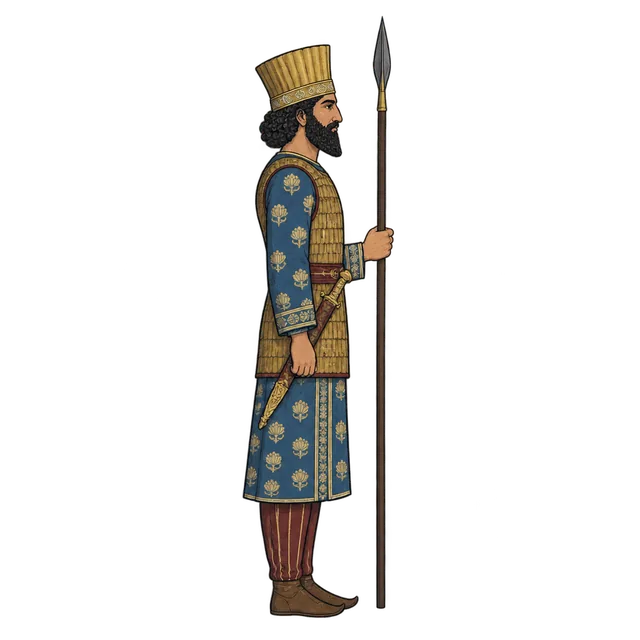
Members were mostly Persians and Medes, the empire’s ruling peoples. A thousand of them, carrying spears with golden pomegranates on the butt-ends, served as the king’s personal guard.
Kit, comfort and travel
Persian infantry fought differently from Greek hoplites. You would carry a shorter spear, a bow with a quiver of arrows, a dagger and a light wicker shield, and wear a soft cap or headcloth, a tunic and trousers – the Greeks found trousers exotic. Glazed brick reliefs from Susa show guardsmen in richly patterned robes.
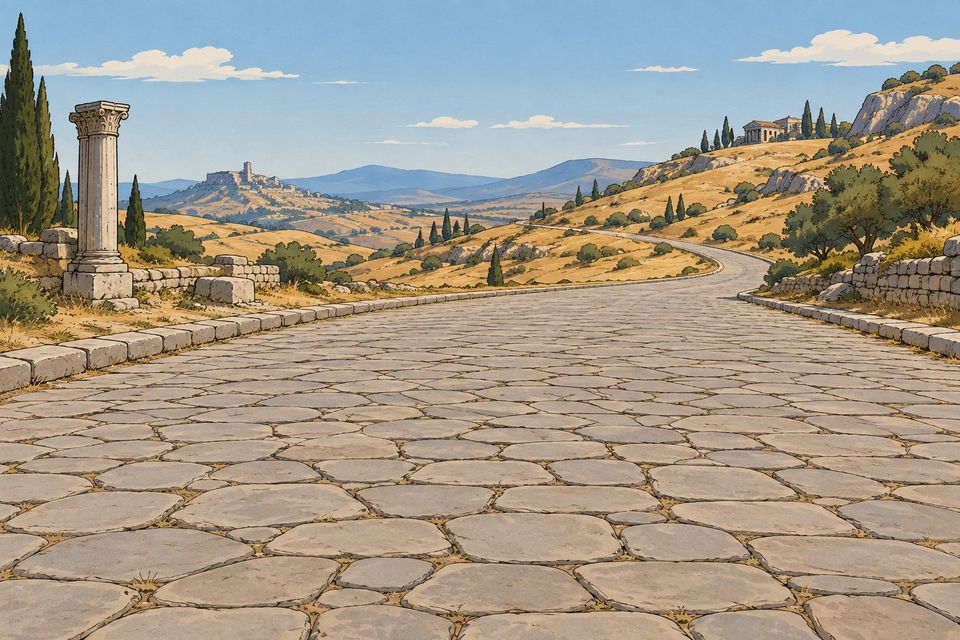
Herodotus says the Immortals marched with the comforts of rank: wagons carrying their concubines and servants and special food supplies. Armies moved along the Royal Road, about 2,500 kilometres from Sardis to Susa, along which royal couriers changed horses at relay stations.
At Thermopylae and beyond
The Immortals’ most famous moment was at Thermopylae in 480 BCE, when Xerxes sent them against the Greek defenders of the pass. They failed in the narrow frontal assault but, guided by a local man, took a mountain path and encircled the Greeks. A century and a half later the empire fell to Alexander the Great, after the battles of Issus in 333 BCE and Gaugamela in 331 BCE.