Deinocheirus
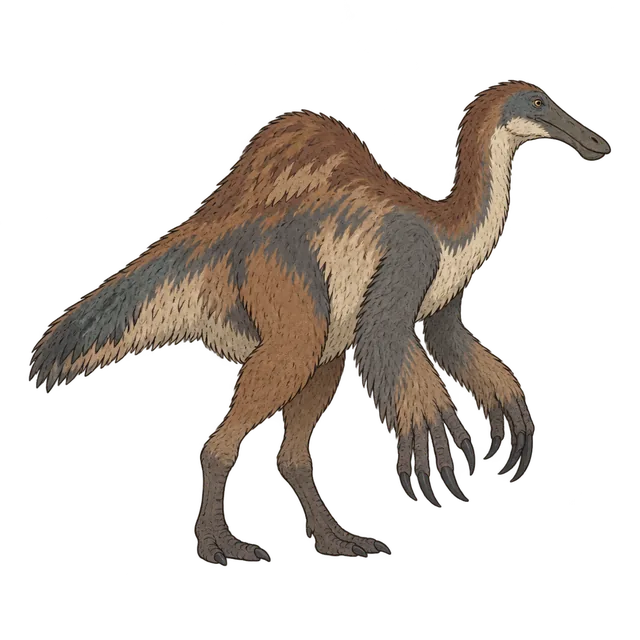
Reborn as Deinocheirus, you would wade through Mongolian river channels on blunt, flat-tipped toes, sifting plants and the odd fish with a toothless bill – and swinging arms longer than a grown man.
Forty-nine years of mystery
In 1965 a Polish–Mongolian expedition led by Zofia Kielan-Jaworowska dug up two enormous arms in the Nemegt Formation of the Gobi Desert. Each was about 2.4 metres long and ended in curved claws. Halszka Osmólska and Ewa Roniewicz named the animal Deinocheirus, “terrible hand”, in 1970 – and for decades nobody knew what the rest of it looked like.
The answer arrived in 2014, after two new skeletons were described and a skull and feet that poachers had smuggled to Europe were returned to Mongolia. The rest of the animal was nothing like the monster everyone had pictured.
A body built by committee
Deinocheirus turned out to be an ornithomimosaur – a relative of the slim “ostrich dinosaurs” – but scaled up to about 11 metres and an estimated 6 tonnes. Tall spines on its back vertebrae formed a hump or sail, the skull was long with a broad, duck-like bill, and the toes ended in blunt, hoof-like tips that would have helped on soft mud.
Those famous arms were probably for digging and for hooking plants towards the mouth rather than for slashing prey. Despite its bulk it was no sprinter: the deep body, heavy hips and short lower legs point to a slow, wading animal. Its skull was over a metre long yet lightly built, and the toothless jaws suggest you would have gulped food rather than chewed it.
Lunch on the riverbank
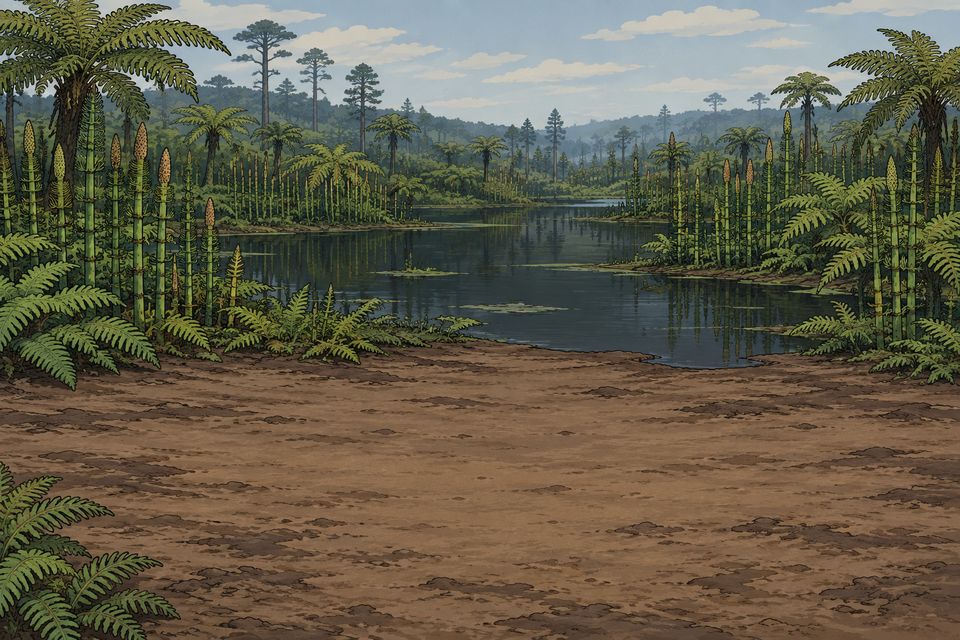
About 70 million years ago the Nemegt was a landscape of rivers and wetlands, not desert. More than a thousand gastroliths – stomach stones for grinding food – were found with one skeleton, together with fish remains, so your diet would have been mixed: soft water plants plus whatever slow-moving prey you could scoop up.
Size kept most threats away, but not all. Bite marks on one specimen’s belly ribs match the teeth of Tarbosaurus, the Asian cousin of T. rex, whether from an attack or from scavenging after death.