Argentinosaurus
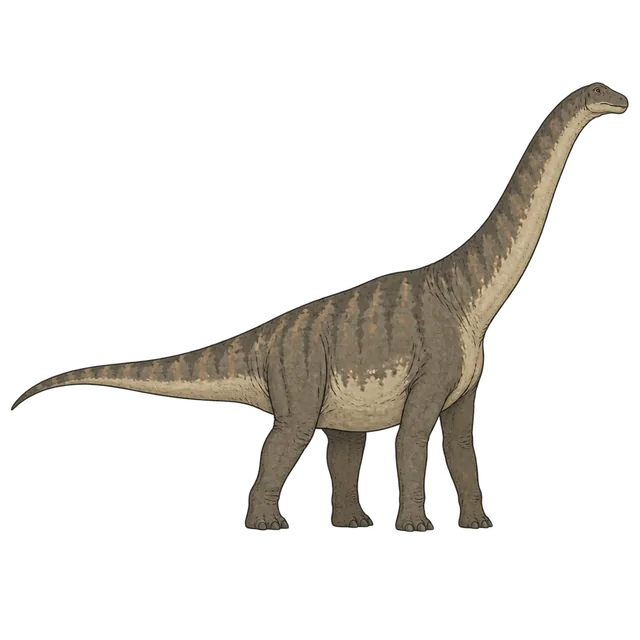
As Argentinosaurus you would be a contender for heaviest animal ever to walk on land – a living hillside that hatched from an egg smaller than a football.
A giant from a handful of bones
In 1987 rancher Guillermo Heredia found what he took for a petrified log on his farm in Neuquén Province, Argentina. It was a dinosaur leg bone. José Bonaparte and Rodolfo Coria named Argentinosaurus huinculensis in 1993 from the Huincul Formation, about 96–94 million years old.
The catch is that only a few bones are known: several back vertebrae, part of the sacrum, ribs and a fibula, plus a partial thighbone. A single back vertebra is about 1.6 metres tall. Everything else – length around 30–35 metres, mass estimates of roughly 65–80 tonnes – is extrapolated from better-known titanosaurs, so treat the numbers as informed estimates.
Eating for a small herd
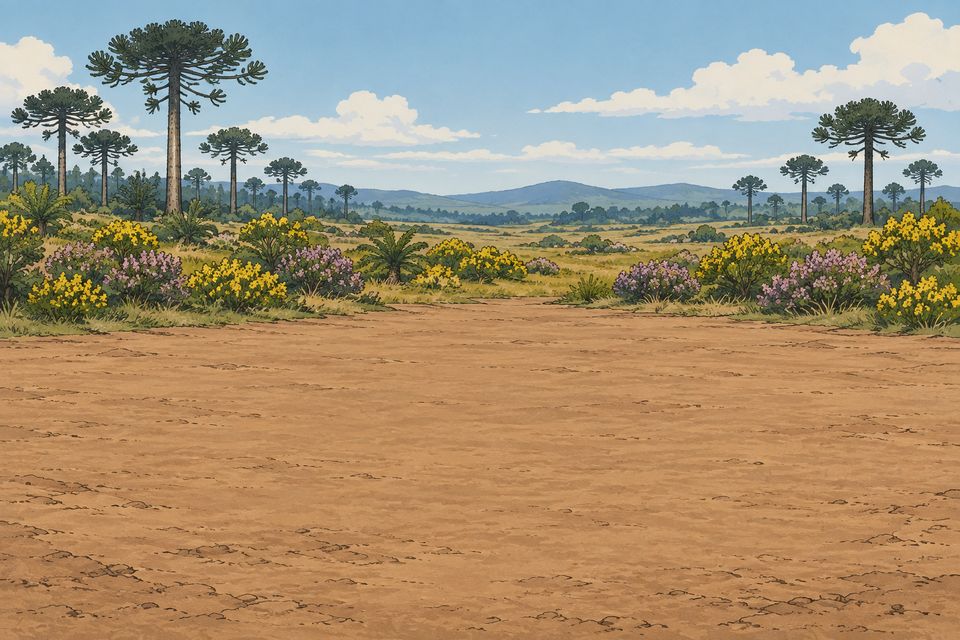
A body this size needed vast quantities of conifers, ferns and early flowering plants every day. Titanosaurs stripped leaves without chewing and relied on long fermentation in the gut. Computer simulations based on scaled-up anatomy suggest a top walking speed of only around 7–8 km/h – a brisk human walk.
Sheer size was its main protection. Mammals today that weigh tens of tonnes are mostly whales, buoyed by water; on land, Argentinosaurus had to carry everything on four columnar legs, with hollow, air-filled vertebrae saving weight.
Small beginnings, big enemies
Titanosaurs laid clutches of round eggs in nests, and the young received no long parental care that we know of. Hatchlings weighed only a few kilograms and had to grow by many thousands of times to reach adult size, which made childhood the dangerous part of your life.
Adults shared their world with Mapusaurus, a giant carcharodontosaurid whose fossils come from the same rock formation. A bonebed of several Mapusaurus individuals has led some to suggest group hunting, but whether they could bring down a healthy adult Argentinosaurus is unknown.