Amargasaurus
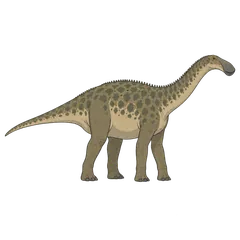
Reborn as Amargasaurus, you would be a modest-sized sauropod with the most extravagant neckline of the Cretaceous: twin rows of spines that may have rattled, displayed or simply warned.
The shortest long-neck
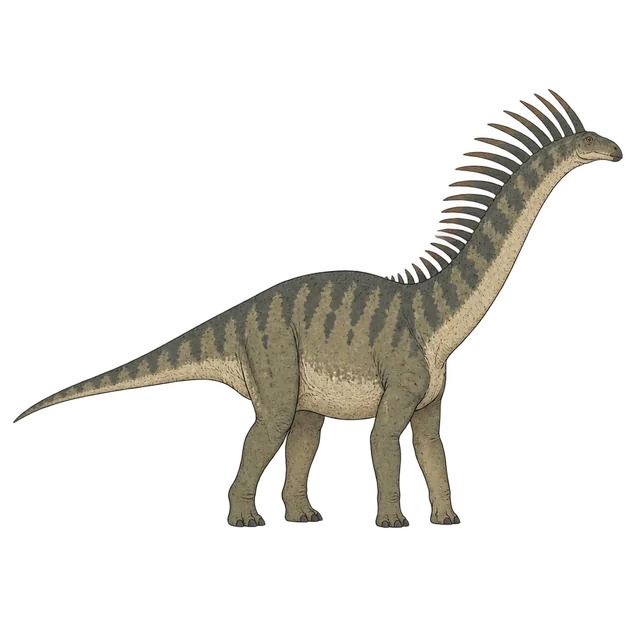
Amargasaurus cazaui lived around 129–122 million years ago in what is now Neuquén Province, Argentina, and was named in 1991 by Leonardo Salgado and José Bonaparte from a single, fairly complete skeleton. At about 9–10 metres long it was small for a sauropod, and its neck was relatively short.
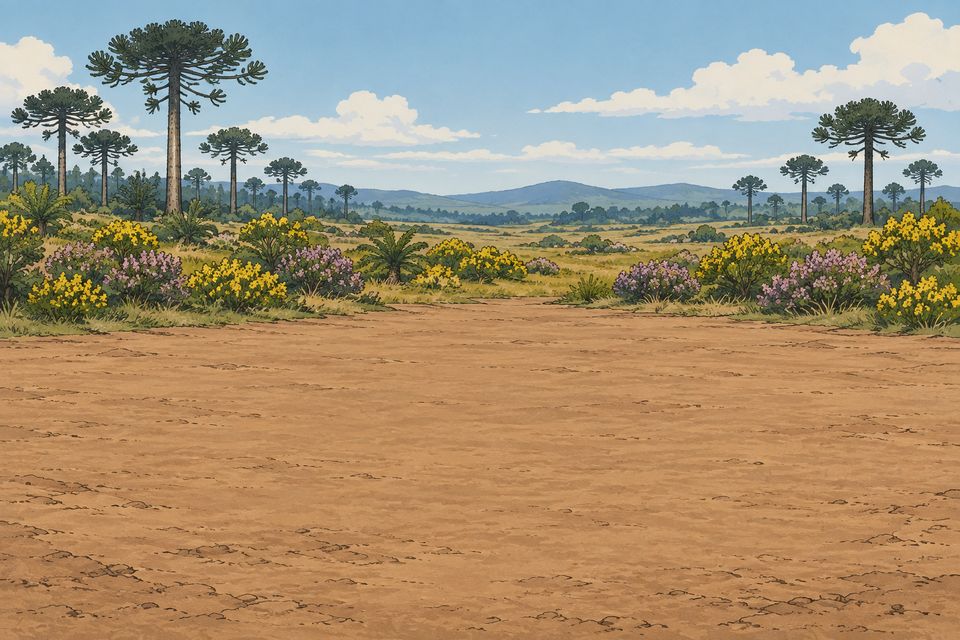
It belonged to the dicraeosaurids, a family of compact diplodocoids that probably fed on low vegetation – ferns, cycads and shrubs near rivers – rather than reaching into treetops. The only known skeleton was discovered in 1984 by an expedition led by José Bonaparte. It includes much of the spine and part of the skull, which is unusually lucky for a sauropod.
Spines: sail, spikes or both?
The defining feature is a double row of very tall, forked spines rising from the neck vertebrae, the longest more than half a metre. What they looked like in life is one of the open puzzles of dinosaur anatomy.
Early reconstructions joined them with skin into one or two sails. Others prefer separate spikes sheathed in horn, like the horn cores of cattle, which would have made the neck look bristling and dangerous. A third view links the spines to support for the neck itself. They might also have clattered together as a sound display. Current evidence does not settle the question, and illustrations of both versions are defensible.
Life with a mohawk
Whatever their covering, spines that conspicuous were almost certainly used for show – to recognise your own kind, to impress rivals or to deter predators by making you look bigger. A neck crowded with tall spines could not bend upwards very far, so your days would be spent browsing at shoulder height and below, keeping an eye out for the meat-eating theropods of Early Cretaceous Patagonia.