Stegosaurus
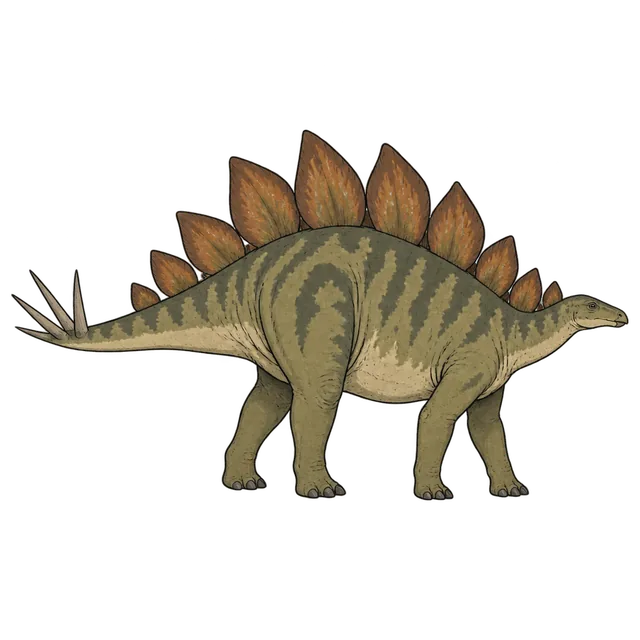
As a Stegosaurus you would carry two staggered rows of bony plates along your back and swing a tail tipped with four long spikes – plenty of armament for a modestly sized brain.
Plates, spikes and the thagomizer
Stegosaurus lived in the Late Jurassic Morrison Formation of the western United States, about 155–150 million years ago, with a possible relative in Portugal. Adults reached about 7–9 metres and roughly 5–7 tonnes. The back plates, up to about 60 centimetres tall, sat in two staggered rows rather than pairs.
The four tail spikes are informally called the “thagomizer”, after a 1982 Far Side cartoon by Gary Larson – a joke name that palaeontologists adopted. These were genuine weapons: an Allosaurus tail vertebra in Utah has a puncture wound matching a Stegosaurus spike.
What the plates were for
The plates were riddled with blood-vessel channels, which once suggested temperature control. Today most researchers think their main job was display and species recognition, with any heat exchange a side effect. They were too thin and poorly placed to be serious armour.
Several species have been named, but many researchers now recognise only one or two in North America, with Stegosaurus stenops the best known.
A small brain, a low diet
Stegosaurus’ brain was about the size of a lime or a large walnut – small relative to its body, though not unusually so for reptiles. The old claim of a “second brain” in its hips came from an enlarged space in the spinal canal, now thought to have held something like the glycogen body seen in birds, not a brain.
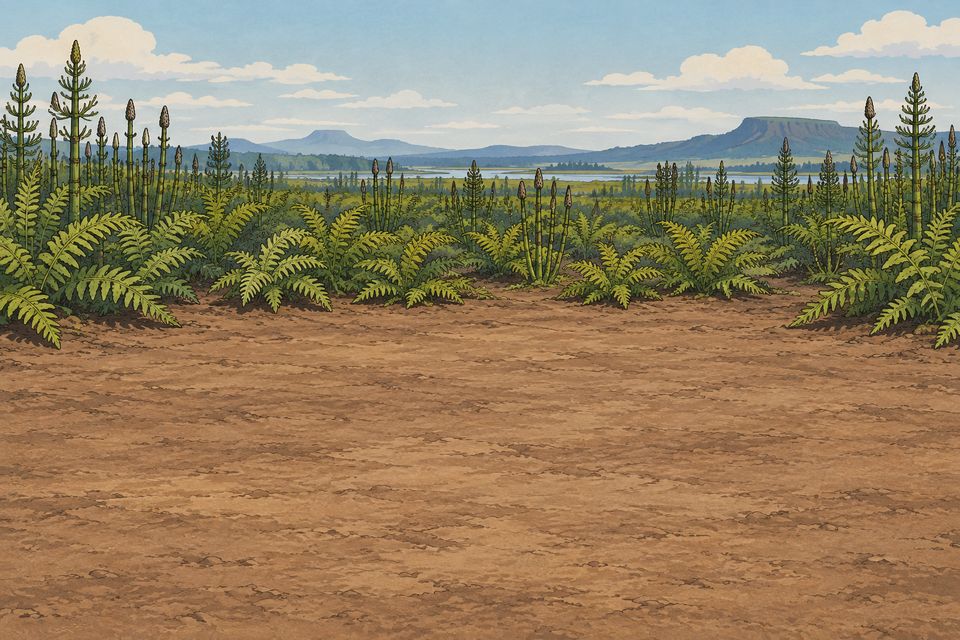
Your head stayed close to the ground, nipping ferns, mosses, horsetails and low shrubs with a beak and small, leaf-shaped teeth. A specimen in London’s Natural History Museum, “Sophie”, is one of the most complete Stegosaurus skeletons ever found.