Parasaurolophus
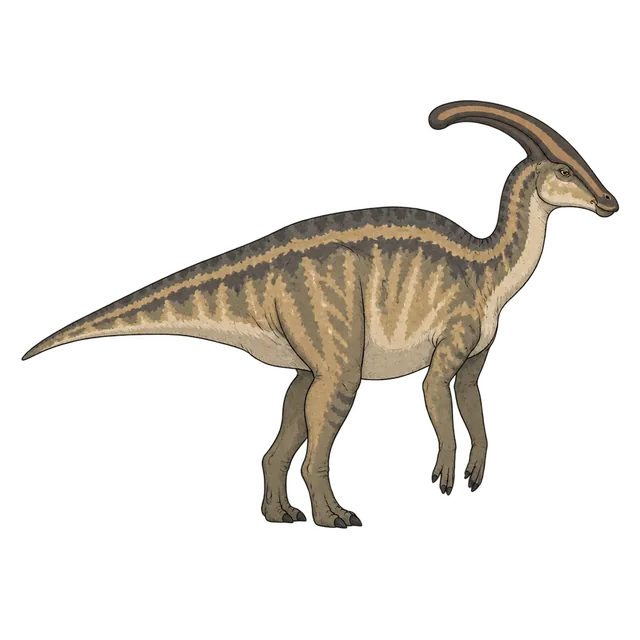
As a Parasaurolophus you would wear a hollow tube more than a metre long on the back of your head – and you could probably use it to call across a whole floodplain.
Hadrosaur with a horn section
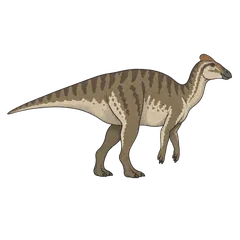
Parasaurolophus was a lambeosaurine hadrosaur – a crested duck-billed dinosaur – about 9–10 metres long and an estimated 2.5–4 tonnes. It lived about 76–74 million years ago in western North America, with three species known from Alberta, New Mexico and Utah. William Parks named the first species, P. walkeri, in 1922.
It could walk on all fours while feeding and run on its hind legs, and like other hadrosaurs it chewed with dental batteries of hundreds of tightly packed teeth – one of the most advanced plant-grinding systems of any reptile. Skin impressions from hadrosaurs show a pebbly, scaly hide, and Parasaurolophus probably looked similar.
What the crest was for
The crest was not solid bone but contained looping nasal passages running from the nostrils up to its tip and back. Older ideas – a snorkel, an air tank, a weapon – have been rejected. The leading explanation is sound: acoustic studies going back to David Weishampel in 1981, and later computer models of the airways built from CT scans, suggest it could produce deep, resonant calls, perhaps like a low horn.
The crest was also surely visual, helping individuals recognise each other and possibly differing between sexes or ages; a juvenile specimen nicknamed “Joe” shows the crest was already growing in youngsters under a year old.
A day in the swamp forest
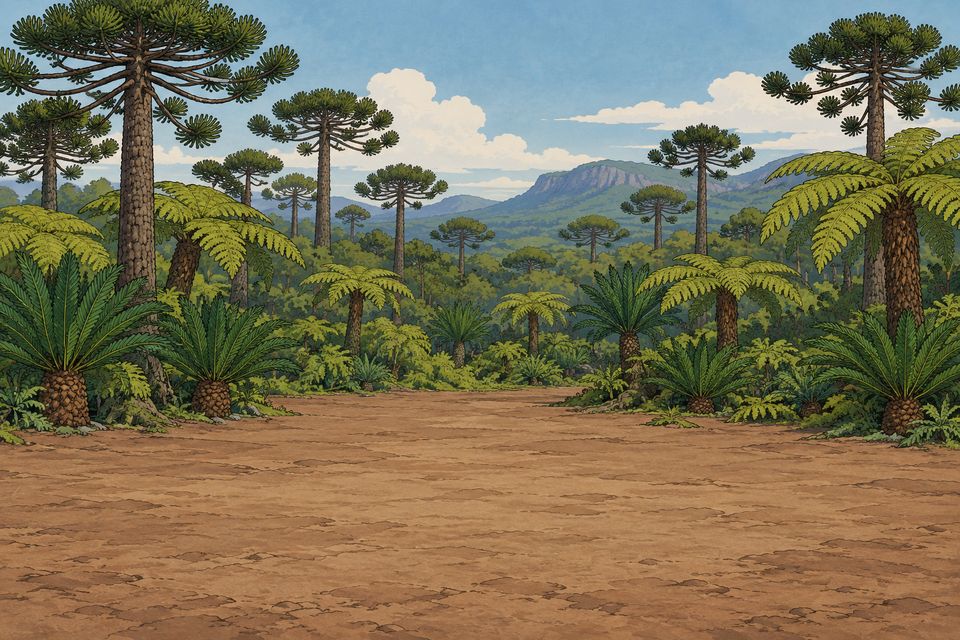
Your world would be the warm, wet coastal plains near the Western Interior Seaway, rich in conifers, ferns and flowering plants. Herds of hadrosaurs were a mainstay for tyrannosaurids such as Daspletosaurus and Gorgosaurus, so loud calls may have served as alarms as well as greetings.