Leaellynasaura
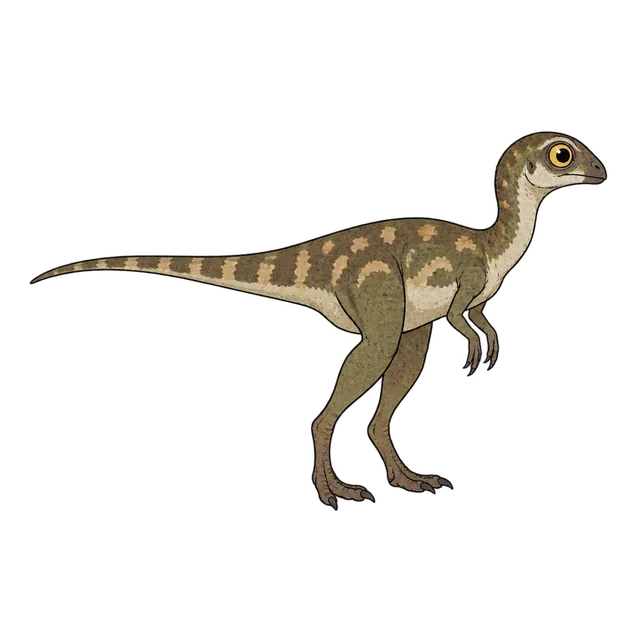
As a Leaellynasaura you would be a turkey-sized dinosaur living inside the Antarctic Circle, with large eyes for the long polar night and a tail three times longer than your body.
Dinosaurs of the polar forests
About 110 million years ago, south-eastern Australia was still joined to Antarctica and lay well inside the polar circle. At Dinosaur Cove in Victoria, palaeontologists Tom Rich and Patricia Vickers-Rich spent years tunnelling into coastal cliffs to recover fossils. In 1989 they named a small plant-eater after their daughter, Leaellyn – Leaellynasaura amicagraphica.
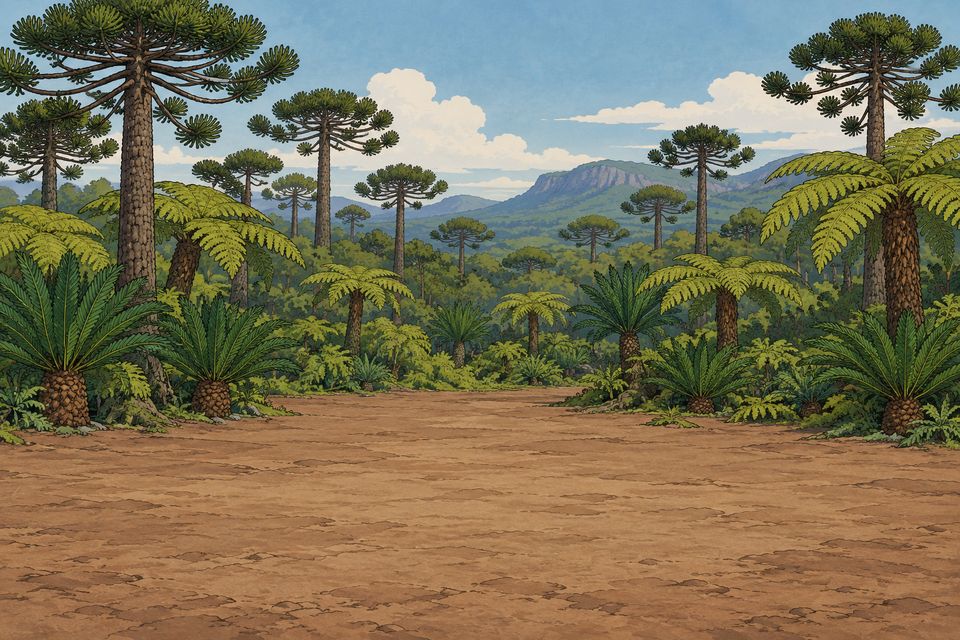
The climate was cool rather than icy, with forests of conifers, ferns and ginkgoes, but winters brought weeks to months of near-continuous darkness.
Big eyes, long tail
Leaellynasaura was a small, fast, two-legged ornithopod, with a body roughly the size of a turkey’s and a weight of perhaps a few kilograms. Its skull has large eye sockets, and a cast of the inside of the braincase was interpreted as showing enlarged optic lobes – possibly an adaptation to seeing in low light, though this interpretation has been questioned.
Its most surprising feature is its tail: a partial skeleton referred to the species suggests the tail had more than 70 vertebrae and was about three times the length of the rest of the body. One proposal is that the animal wrapped it around itself for warmth, like a snow leopard, but that is speculation.
Surviving the dark
How small dinosaurs coped with polar winters is still debated. Some may have stayed active in the dark, others may have sheltered or slowed down. Unlike large animals, a creature this size could not migrate thousands of kilometres. If you were reborn here, insulation – perhaps some kind of fuzz – and an ability to find food in the dark would matter more than speed or armour.