Iguanodon
As an Iguanodon you would have a spike on each thumb, three hoof-like middle fingers and a nimble little finger for grasping – the Swiss army knife of Cretaceous hands.
A pioneer of palaeontology
Gideon Mantell named Iguanodon in 1825 from teeth found in Sussex, England, which reminded him of an iguana’s – making it the second dinosaur ever named, after Megalosaurus. Early reconstructions showed a quadrupedal, rhinoceros-like reptile with its thumb spike placed on its nose.
The picture changed in 1878, when miners at Bernissart in Belgium found dozens of complete skeletons more than 300 metres underground. Louis Dollo studied them and showed the spike belonged on the thumb.
That remarkable hand
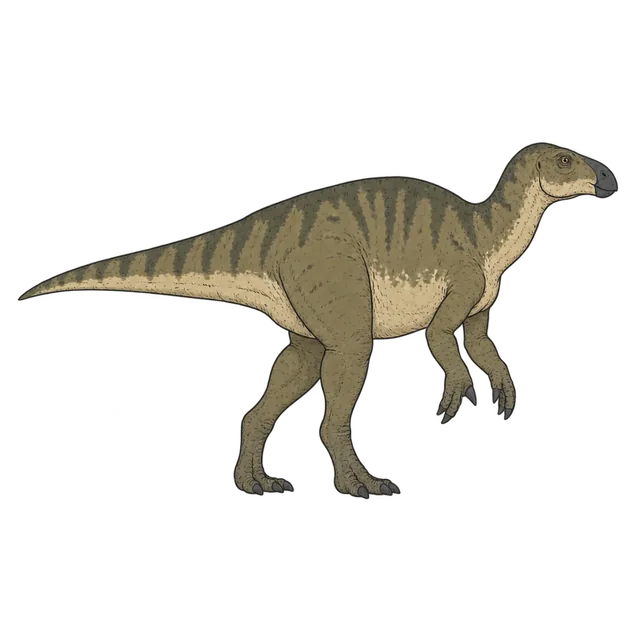
Iguanodon bernissartensis was about 9–11 metres long and weighed an estimated 3–5 tonnes. Its hands combined a conical thumb spike – perhaps for defence, breaking open food or fighting rivals – with three hoof-like middle fingers for weight-bearing and a flexible fifth finger that could grasp. Adults probably spent much of their time on all fours and could rise onto the hind legs.
Rather than the upright, kangaroo-like stance of old museum mounts, modern reconstructions show a near-horizontal back and a stiff tail held off the ground. Iguanodon also helped inspire the very word “dinosaur”: when Richard Owen coined the term in 1842, it was one of only three genera he grouped together, alongside Megalosaurus and Hylaeosaurus.
Life on the Wealden floodplain
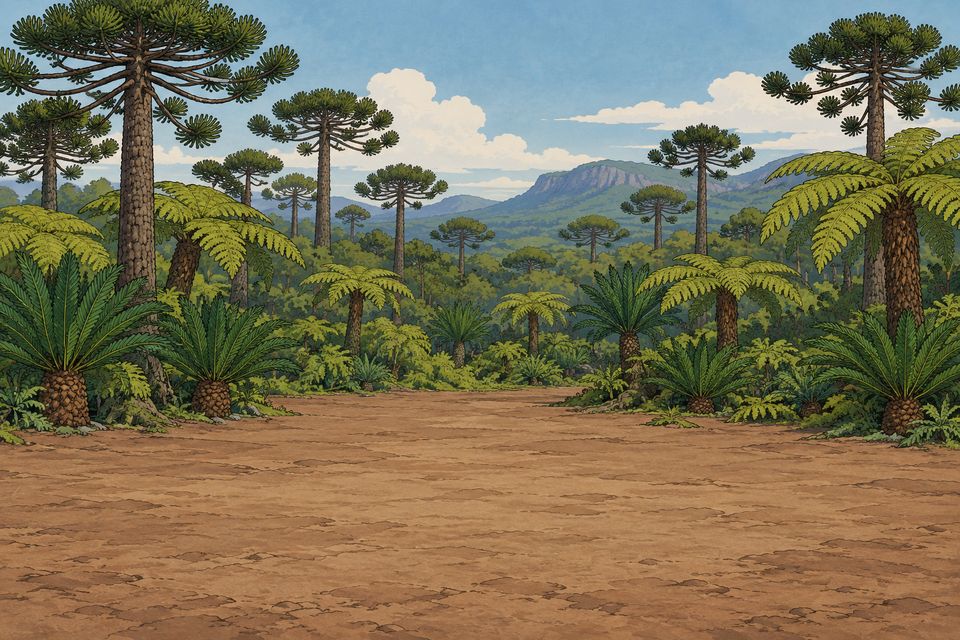
Iguanodon lived in Europe about 126–122 million years ago, on wide floodplains crossed by rivers. Your diet would be horsetails, ferns and conifers, chopped with a toothless beak and chewed by rows of leaf-shaped cheek teeth. The Bernissart find suggests that groups lived – and sometimes died – together, though whether the skeletons accumulated at once or over time is debated.