Roman patrician
Born a patrician, you would inherit something money could not buy in Rome: a family name stretching back, so tradition claimed, to the first senators chosen by Romulus.

Blood, not money
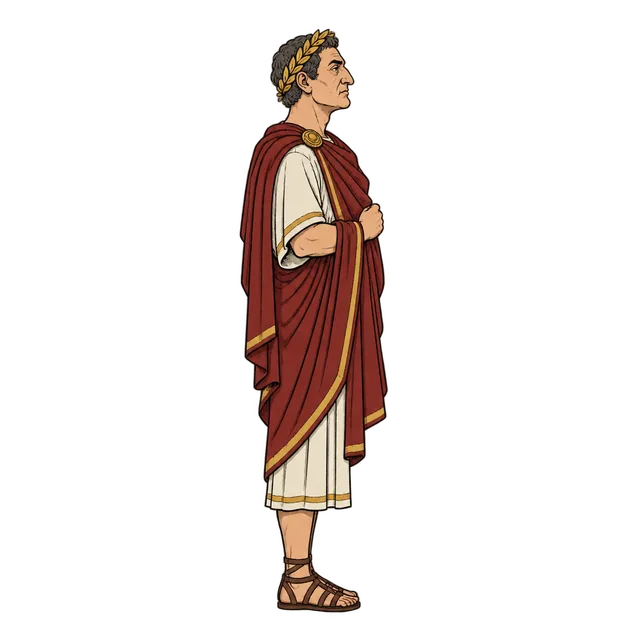
Patricians were a hereditary aristocracy, a small group of families such as the Cornelii, Claudii, Fabii, Julii and Valerii. Roman tradition said their ancestors were the patres, the fathers, appointed by Romulus to the first Senate. Status passed through birth, and for a time patricians were even forbidden to marry plebeians, a ban lifted in 445 BCE.
In the early Republic patricians monopolised the consulship and major priesthoods. Over the following centuries, plebeian pressure stripped most of these privileges away, and by the late Republic wealth and office counted for more than birth. A few rituals still required patricians, such as certain priests of Jupiter, and the old title kept its snob value.
Living with the ancestors
Your town house would display wax masks (imagines) of ancestors who had held high office, kept in cupboards in the atrium with labels listing their achievements. At family funerals, actors wore the masks and walked in procession, so the dead seemed to escort their newest member. The Greek historian Polybius was so impressed that he described the custom in detail.
Away from Rome, wealthy families owned country villas with estates worked by enslaved labour, as well as seaside retreats on the Bay of Naples, where they spent the hot months reading, hosting dinners and fishing in ornamental ponds.
A shrinking club
Many patrician families died out, and by the late Republic only a handful of patrician clans were still active in politics. Emperors created new patricians to refill the ranks: Julius Caesar and Augustus raised plebeian families to patrician rank. Later, the title patricius became an honour given to top officials, a meaning that survived into the Middle Ages.