Quetzalcoatlus
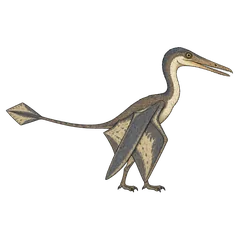
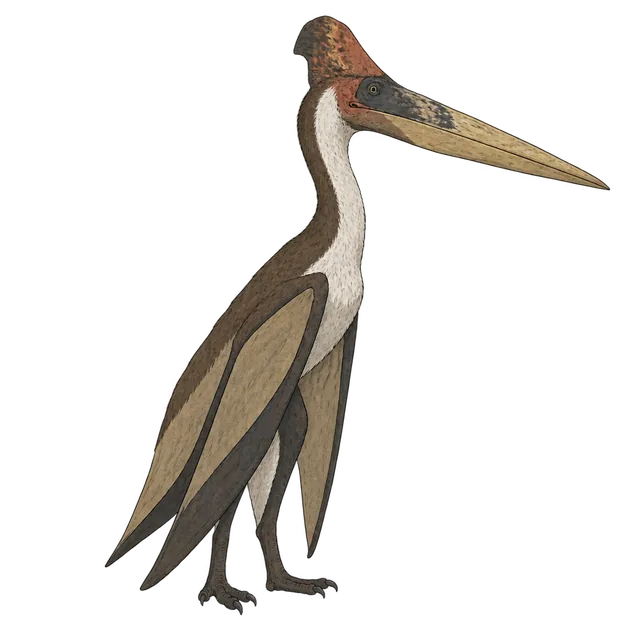
As a Quetzalcoatlus you would stand as tall as a giraffe, fold away wings as wide as a small aircraft, and spend much of your time walking – yes, walking – across the plains in search of something to swallow.
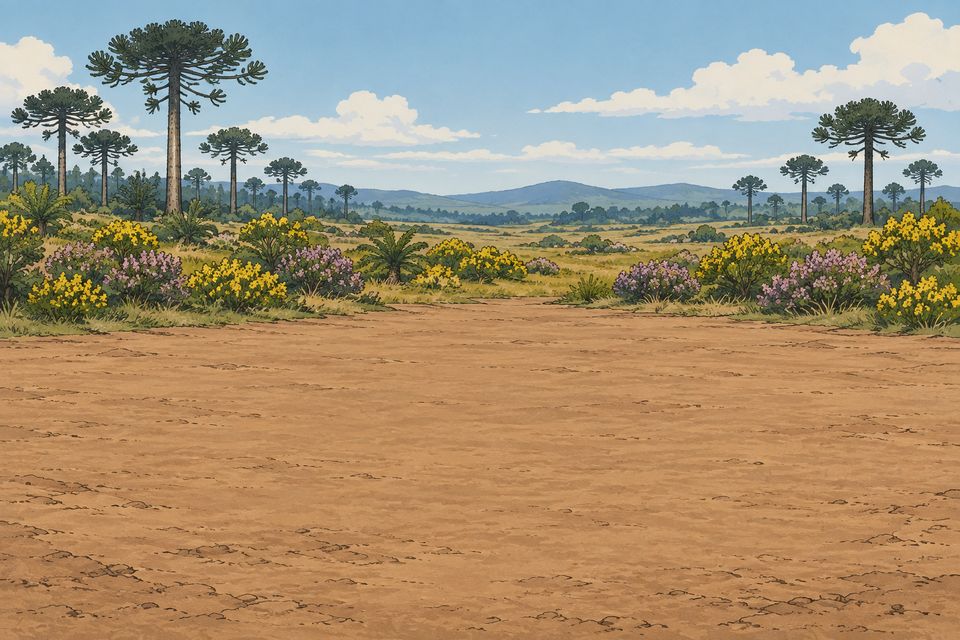
Big Bend, 68 million years ago
Quetzalcoatlus lived at the very end of the Cretaceous, roughly 68 to 66 million years ago, in what is now Big Bend National Park in Texas. The first bones were found in 1971 by a student, Douglas Lawson, in rocks of the Javelina Formation – a landscape of rivers, floodplains and woodland far from any open sea. It was named in 1975 after Quetzalcoatl, the feathered serpent deity of Aztec tradition.
Like every pterosaur it was a flying reptile, not a dinosaur, although it shared its world with dinosaurs such as the giant sauropod Alamosaurus.
The largest flier of its day
Estimates for the big species, Q. northropi, put the wingspan at around 10–11 metres and the weight at perhaps 200–250 kg. Standing on all fours with wings folded, it could hold its head at about the height of a giraffe's. A second, smaller species, Q. lawsoni, had a wingspan of around 4.5 metres and is known from many more bones.
Getting airborne at that size took technique. The leading model has it crouching and vaulting off its powerful forelimbs, a launch lasting a second or two. Once aloft, it could probably ride thermals over long distances.
Stork, not fisherman
Older reconstructions showed it skimming fish from lakes, but its long, stiff neck and the shape of its jaws fit that idea poorly. Most researchers now see azhdarchids like Quetzalcoatlus as ‘terrestrial stalkers’: striding over open ground like a gigantic stork or ground hornbill, snapping up lizards, small mammals, baby dinosaurs and whatever else fitted in the beak.
Few predators would have dared tackle an adult. The ending of this life was fixed for the whole lineage, though: the asteroid impact 66 million years ago wiped out the last pterosaurs.