Therizinosaurus
Spin Therizinosaurus and you get the strangest deal in the predator family: the body of a giant theropod, the diet of a plant-eater, and the longest claws of any known animal.
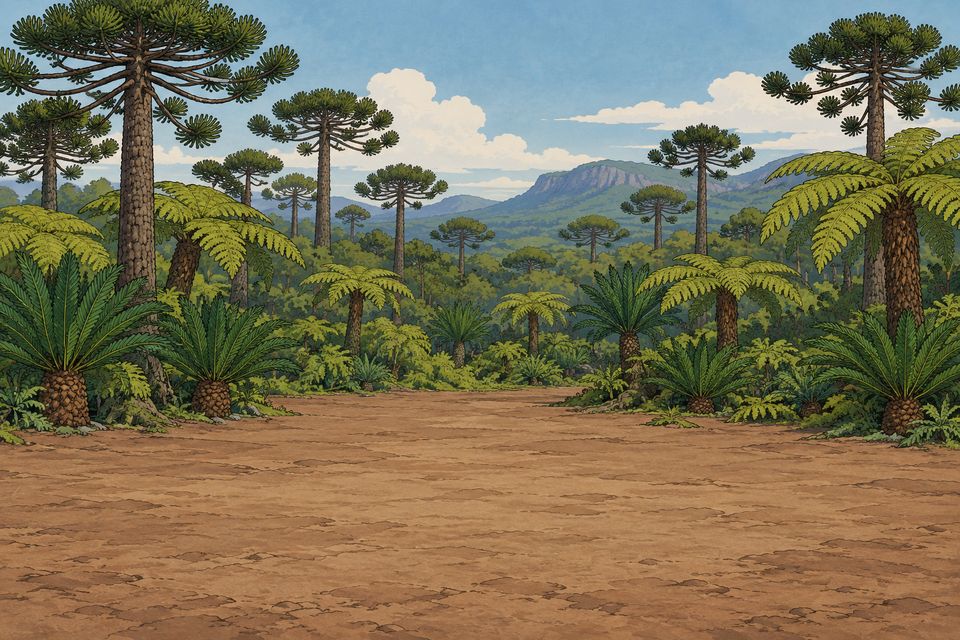
Nemegt, 70 million years ago
You live around 70 million years ago in what is now southern Mongolia. The Nemegt Formation records a wetter world than the earlier Gobi dunes: wide rivers, floodplains and forests. You share it with the tyrannosaur Tarbosaurus, the duck-billed Saurolophus and the bizarre Deinocheirus.
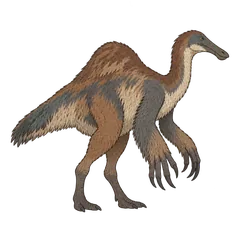
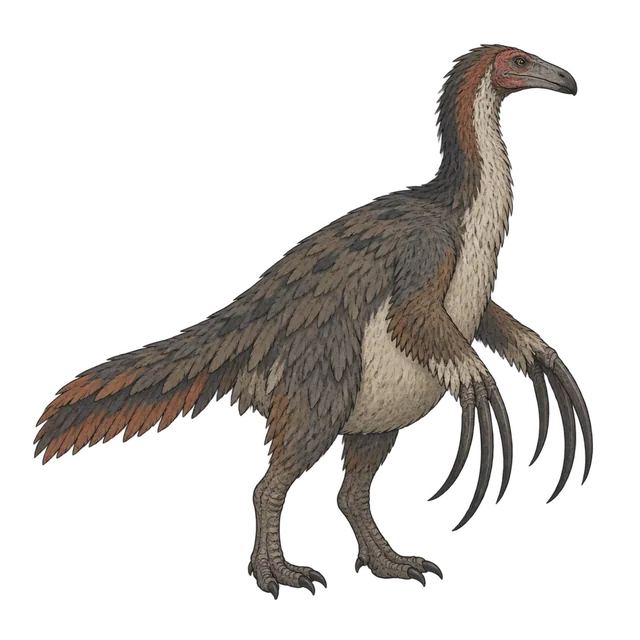
You are about 9–10 metres long and estimated at around 5 tonnes, with a small head, long neck, wide hips carrying a large gut, and an upright stance. Big feet with four weight-bearing toes and a broad pelvis suggest a slow, deliberate walk. Your main defence against predators was your size and those enormous claws, rather than speed.
Salad, not steak
Therizinosaurs descended from meat-eaters but turned to plants. Your relatives had toothless beaks at the front of the jaw and small leaf-shaped teeth behind, and that big belly held a long digestive tract to ferment tough vegetation. Picture yourself reaching high branches with your long neck, pulling them closer with your claws.
The claws themselves – the bony core of the largest is over half a metre long, and the horny sheath made it longer still – were probably used for hooking vegetation, display and defence against Tarbosaurus. Studies suggest they were not strong enough for digging or heavy striking.
Mistaken for a turtle
When Soviet palaeontologist Evgeny Maleev named Therizinosaurus (“scythe lizard”) in 1954 from a few claws, he thought they belonged to a giant turtle-like reptile. Only after decades of new finds did it become clear that therizinosaurs were theropods – close relatives of oviraptorosaurs and birds. Feathered relatives such as Beipiaosaurus suggest you were at least partly feathered.