Seagull
As a gull you would take four years to grow into your grey-and-white adult suit – and spend them learning that a tourist with an ice cream is an opportunity.

Which gull are you?
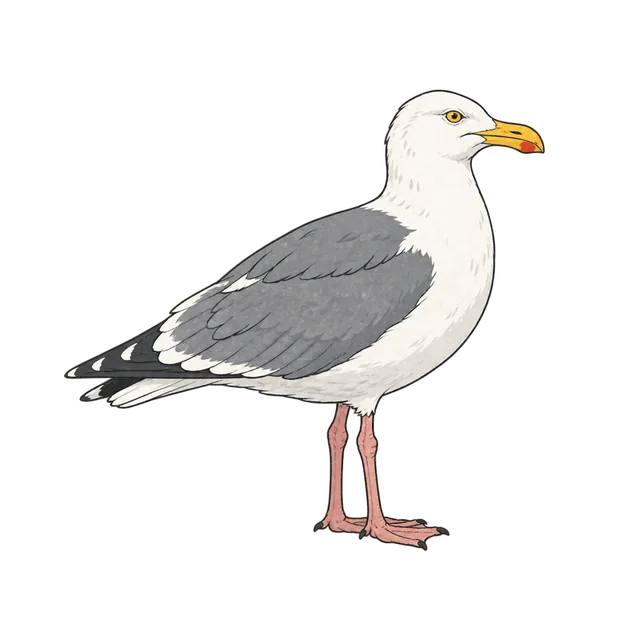
Seagull is not one species. In coastal Europe the big, loud bird on harbour walls and rooftops is usually the herring gull, Larus argentatus, or one of its close relatives such as the Caspian or yellow-legged gull. On the Baltic the smaller black-headed gull and common gull are frequent too. A herring gull has a wingspan of around 1.3–1.5 m, pink legs and a yellow bill with a red spot near the tip.
Young gulls are mottled brown and take about four years to reach adult plumage, moulting through a series of intermediate patterns that confuse birdwatchers.
A generalist with a strategy
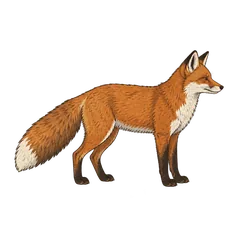
You would eat almost anything: fish, crabs, mussels, earthworms on ploughed fields, eggs and chicks of other birds, carrion, landfill waste and food snatched from people. Herring gulls drop shellfish onto rocks or car parks to crack them. Since the mid 20th century many gulls have moved into cities, nesting on flat roofs where foxes cannot reach and food is abundant.
The red spot on the bill matters. Classic experiments by Niko Tinbergen showed that chicks peck at it to make the parent regurgitate food. He shared the 1973 Nobel Prize partly for work like this.
Noisy neighbours, devoted parents
Gulls breed in colonies and usually lay three eggs, which both parents incubate for about four weeks. Parents defend the nest aggressively, swooping at and sometimes striking intruders, including humans who get too close. Adult herring gulls can live for decades; ringed birds over 30 years old are on record, though many die young from starvation, predators, fishing gear, collisions and bird flu.