Domestic pig
As a farm pig you would be among the cleverest animals in the barn – and, in most modern systems, among the shortest-lived.
From wild boar to pink pig
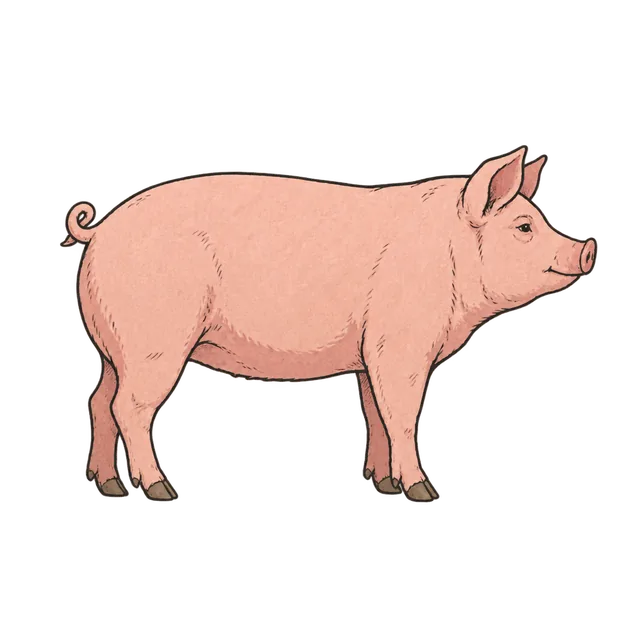
Pigs were domesticated from the wild boar about 10,000 years ago, independently in Anatolia and China. The pink, lop- or prick-eared pigs of European farms, such as the Large White and Landrace and their crosses, are the product of intensive breeding for fast growth and lean meat. Your snout is still the boar’s: a flexible, highly sensitive tool for rooting in soil. You have very few functional sweat glands, so you cool off by wallowing in mud or water, which also protects pale skin from sunburn.
Pigs are not dirty by choice. Given space, they keep separate areas for sleeping and dunging.
A thinking animal
Pigs are intelligent and social. In experiments they have learned to operate levers and joysticks, find hidden food by following other pigs and use mirrors to locate food they can only see reflected. They communicate with a large repertoire of grunts and squeals, and piglets recognise their mother’s voice.
A sow gives birth to around 12–14 piglets per litter on modern farms. Piglets suckle from their own chosen teat and grow quickly, increasing their birth weight many times over within a few weeks.
A short life on a modern farm
In intensive farming, the type that produces most pork in Poland and the EU, piglets are weaned at about three to four weeks, raised in groups indoors and slaughtered at around six months, weighing 100–120 kg. Breeding sows live longer, typically a few years, producing two litters a year. EU rules ban keeping sows in individual stalls for most of pregnancy, require enrichment material such as straw and limit tail docking, though enforcement varies. A pig allowed to live out its life can reach 15 years or more. On small farms and in free-range systems, you would root outdoors, which pigs strongly prefer.