Goldfish
As a goldfish you would remember far more than three seconds – including who feeds you and when.

A carp in fancy dress
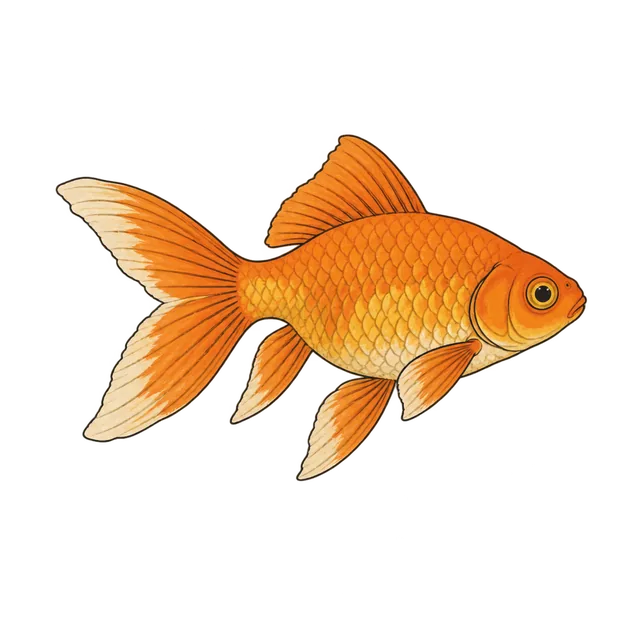
The goldfish, Carassius auratus, is a domesticated form of a wild East Asian carp that is normally greenish-brown. In China, orange and yellow mutants were kept in ponds over a thousand years ago, and by the Song dynasty people were deliberately breeding them; later they were raised in bowls indoors. Goldfish reached Japan in the 16th century and Europe by the 17th–18th centuries. Selective breeding has produced dozens of varieties, from slim common goldfish to round fantails, bubble-eyes and orandas with a raspberry-like head growth.
As a domestic fish in a home aquarium, you would see colour well, including ultraviolet, and sense vibrations in the water through your lateral line.
The three-second myth
Experiments have shown that goldfish can learn to associate a sound or a light with food, find their way through simple mazes and remember such tasks for weeks or months. Many owners notice their fish swimming to the front of the tank when a familiar person approaches.
Your day would be spent foraging: goldfish are omnivores that nibble algae, plants, insect larvae and, in captivity, flakes and pellets. You have no stomach in the usual sense, so small, frequent meals suit you better than one big feeding.
How long you could live
Kept well, goldfish commonly live 10–15 years and some reach 20 or more. They grow large: common varieties can exceed 20 cm. A small round bowl is a poor home, because goldfish produce a lot of waste, and ammonia builds up quickly without filtration and space. Most early deaths come from poor water quality, overfeeding and sudden temperature changes. Released into rivers and lakes, goldfish can grow even bigger and become invasive, competing with native fish and stirring up sediment.